9 benefitsscience-backed for brain and body
All agesfrom newborn to 12 years old
1M/secneural connections formed ages 3 to 5
2025latest peer-reviewed research
The Big Picture
Why Dancing With Your Child Is the Most Underrated Parenting Tool
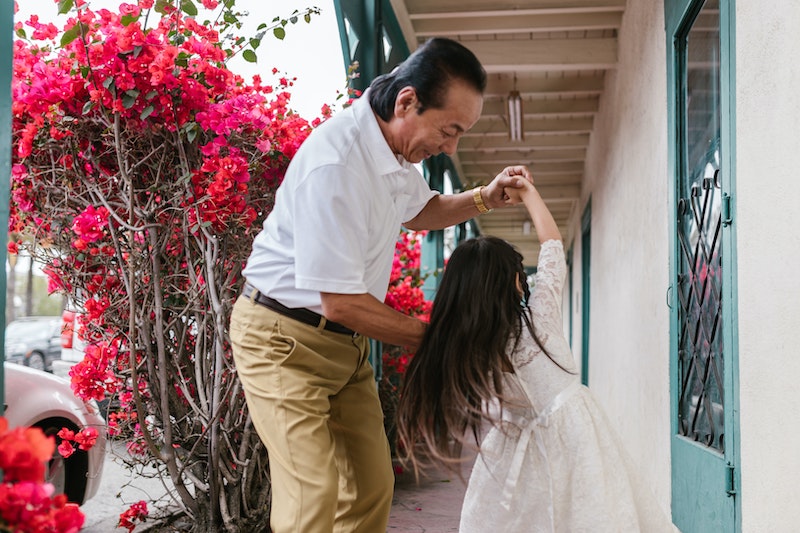
Dancing with your children is one of the most developmentally powerful activities a parent can share with a child — and almost no one talks about it in those terms. We discuss reading together, structured play, educational apps, screen time limits. But dancing, which costs nothing, requires no equipment, and can happen in any kitchen or living room in the world, rarely makes the list.
The science, when you look at it, is remarkable. Dancing with a child simultaneously activates their auditory cortex, motor cortex, limbic system, and prefrontal cortex — the same distributed brain network that music activates in adults, magnified by the physical movement and the presence of a trusted attachment figure. In other words: dancing with a parent activates a child’s entire brain while they feel safe, loved, and joyful. That is an almost unbeatable combination for learning and development.
A preschool child’s brain forms over one million new neural connections every second. Activities like dancing that engage the body and mind simultaneously — especially in the presence of a parent — have an outsized impact on the quality and resilience of those connections. The American Academy of Pediatrics recognizes movement-based activities as foundational to physical, cognitive, and social-emotional development in early childhood.
Neuroscience
What Happens in Your Child’s Brain When You Dance Together
When a child dances with a parent, several brain regions activate simultaneously in a way that very few other activities can replicate:
| Brain Region | Activated by Dance | Developmental Benefit |
|---|
Auditory Cortex | Processes rhythm, melody, beat | Language development, musical pattern recognition, phonological awareness |
Motor Cortex and Cerebellum | Coordinates movement to rhythm | Gross motor skills, coordination, balance, body awareness |
Limbic System (Amygdala, Hippocampus) | Generates emotion and memory | Emotional regulation, attachment bonding, autobiographical memory formation |
Nucleus Accumbens | Releases dopamine | Positive associations with physical activity, reward system development |
Prefrontal Cortex | Executive function, anticipation of musical patterns | Focus, working memory, self-regulation, inhibitory control |
Corpus Callosum | Connects brain hemispheres for integrated movement | Bilateral coordination, cross-domain learning integration |
2025 Research — Tandfonline / Journal of Early Childhood Education
“Dance is an innate activity that children engage in from birth. When language barriers exist due to age or bilingualism, dance can serve as an effective means of communication — allowing for expression without the pressure to conform to a specific form.”
MacRae et al., Dancing With Children or Dancing For Children? Early Child Development and Care, Tandfonline, January 2025
The 2025 study from Tandfonline is particularly significant: it demonstrated that when children are given agency in dance — co-creating movements rather than following prescribed choreography — they show greater gains in confidence and self-expression. The study ran over 5 months in five preschool classrooms in London, with data collected through semi-structured interviews with practitioners. The implications for parent-child dancing at home are direct: following your child’s lead in dance is as developmentally powerful as leading.
Science-Backed Benefits
9 Proven Benefits of Dancing With Your Children
🧠Improved Executive Function
A 2022 study in Early Childhood Research Quarterly found that children who regularly danced with parents showed improved executive function — the cognitive processes responsible for focus, working memory, and self-control.
Early Childhood Research Quarterly, 2022
💃Gross Motor Development
Dance builds balance, coordination, spatial awareness, flexibility, and body control. Children who dance regularly develop better gross motor skills and become more confident in their physical abilities throughout childhood.
American Academy of Pediatrics; PMC NIH 2022
❤️Stronger Parent-Child Bond
Physical movement with a trusted caregiver activates the attachment system. The shared joy and eye contact of dancing together creates positive emotional memories that strengthen the parent-child relationship.
Journal of Health Psychology
😌Reduced Anxiety and Depression
Researchers from the University of Sydney, University of NSW, Macquarie University, and Queensland University of Technology found that dancing reduces depression and anxiety more effectively than any other physical activity. This applies to children as much as adults.
University of Sydney consortium, 2024
🗣️Language and Communication
Research correlates early movement activities including dance with emerging language skills in children. Dance develops non-verbal communication and creates a multimodal context for expression that supports language development, especially in bilingual children.
Anvari et al.; Tandfonline 2025
🎭Emotional Intelligence
Dance allows children to express emotions they may not yet have words for. Regular dancing helps children identify, process, and communicate their emotional states — a foundation for social competence throughout life.
Dance Dynamics; Frontiers in Psychology
📚Memory Enhancement
Learning and remembering dance sequences builds working memory and long-term recall. Research shows children who dance regularly develop improved memory capacity that transfers to academic performance beyond the dance context.
PMC NIH Systematic Review, 2022; Oppici et al., 2020
🌟Self-Esteem and Confidence
Mastering new movements, being seen and celebrated by a parent, and expressing oneself physically all build a child’s sense of competence and self-worth. Studies show dance significantly improves self-esteem and social confidence in children.
Journal of Health Psychology; Dance Dynamics, 2024
🏃Lifelong Physical Health Habits
Children who associate physical activity with joy, connection, and parental presence are significantly more likely to remain physically active throughout their lives. According to the American Academy of Pediatrics, early movement activities support lifelong cardiovascular health and healthy weight maintenance.
American Academy of Pediatrics
Parent Guide
How to Dance With Your Child at Every Age: 0 to 12
Dancing looks different with a newborn than with a ten-year-old. Here is a practical guide to what dancing together means — and what it achieves — at each stage of childhood:
Babies respond to music and rhythmic movement from birth — even in utero. Hold your baby against your chest and sway slowly, or gently bounce them to a beat. Make eye contact. Sing along. At this age, dancing is inseparable from lullabies and rhythmic comfort. The parent’s heartbeat and movement create a sense of safety and regulation that is foundational to emotional development. Research shows that even at very early ages, babies display dance-like elements in their movements in response to music.
Good music for this age
Slow, melodic songs at 60 to 80 BPM. Lullabies. French chansons like Pomme’s gentle folk music. Erik Satie’s Gymnopédies. Classical slow movements.
Toddlers are natural dancers. Put on music and watch them respond — clapping, spinning, jumping, bobbing. At this stage, your job is to join them, not lead them. Mirror their movements. Match their energy. Fall down together when the music stops. The goal is not coordination but connection and the establishment of a joyful relationship between music and movement. Toddlers’ brains are forming neural connections at extraordinary speed, and movement-rich experiences build the pathways for language and cognition.
Good music for this age
Upbeat children’s songs with clear rhythms. French children’s classics. Nursery rhymes with movement cues. Anything with a strong, clear beat that invites physical response.
Between ages 3 and 5, the brain forms over one million new neural connections per second. This is the peak window for using dance to build cognitive, emotional, and physical foundations. At this age, give your dances a story: “Let’s dance like we’re in a forest” or “Show me how you feel with your body.” Follow their lead. The 2025 Tandfonline research showed that children given co-creative agency in dance showed significantly greater gains in confidence and self-expression than those following adult-led choreography.
Good music for this age
Music with stories or imagery. Daft Punk’s accessible electronic music. French animated film soundtracks. World music with distinctive rhythms (African, Caribbean, Latin).
Older children can engage with dance as skill-building, cultural exploration, and identity formation. Teach them a simple dance you know. Ask them to teach you one from their generation. Explore different styles together — Latin, hip-hop, classical, folk. This is also the age when sharing music you love becomes a genuine cultural transmission: a child who dances to Édith Piaf or Django Reinhardt with a parent has received something no school curriculum can give them. Let them choose the music sometimes. Be willing to look ridiculous.
Good music for this age
Their current favorites alongside yours. French classics they can ask about. Orelsan’s more family-appropriate songs. Latin rhythms. Whatever makes both of you want to move.
France Music Picks
French Music to Dance With Your Children
French music offers extraordinary variety for family dancing — from the playful rhythm of musette accordion to the gentle folk of contemporary chanson, the driving beats of French electronic music, and the joyful energy of French pop. Here are picks for different moods and ages:
Gentle and Soothing · All Ages
Pomme — “Âge de pierre”
Folk chanson, gentle and intimate. Perfect for slow, close dancing with young children.
Upbeat and Playful · Ages 3 to 8
Daft Punk — “Around the World”
A single hypnotic groove that preschoolers and school-age children find irresistible. Introduces French electronic music.
Classic and Cultural · Ages 6 and up
Édith Piaf — “La Vie en Rose”
The most recognized French song in the world. Dance slowly together and tell them the story of La Môme.
Rhythm and Energy · Ages 4 and up
Stromae — “Papaoutai”
Irresistible danceable beat with emotional depth. One of the best contemporary French songs for family dancing.
Traditional French Rhythm · All Ages
Accordion Musette — Traditional vals musette
The original Parisian dance music. Teach your children the basic waltz step to the sound of the accordion.
Contemporary Fun · Ages 6 and up
Aya Nakamura — “Djadja”
Afropop energy and irresistible rhythm. France’s most-streamed artist globally — great for introducing contemporary French music.
How to Start
10 Practical Tips to Make Family Dancing a Regular Habit
📍Create a designated dance moment
A specific, recurring time — Friday evening dance, after-dinner songs, Saturday morning kitchen dancing — is more effective than occasional spontaneous sessions. Ritual creates anticipation and memory.
🎵Build a shared family playlist
Combine songs from different generations and let everyone contribute. A playlist both parent and child helped create has more emotional significance than one chosen by one person alone.
🙈Be willing to look ridiculous
The moment you stop worrying about how you look, your child relaxes completely. Exaggerated, silly movements communicate safety and permission to play. This is not a performance — it is connection.
👑Let your child be the teacher
Ask them to show you a dance they know. Follow their lead without correcting or improving. This reversal of roles builds their confidence and communicates that their expression has value.
🌍Explore world music together
Brazilian samba, Cuban son, West African djembe, French musette, Argentine tango. Different music styles invite different body movements and teach children that the world has many rhythms worth knowing.
🌙Use slow dancing for bedtime transitions
A slow, close dance in dim light with a calm song is one of the most effective transitions from active evening to sleep. The combination of physical closeness, rhythmic movement, and lowered arousal is naturally regulating.
📱Keep devices out of the dance space
Put your phone away. A child notices immediately when a parent is present versus physically present but mentally elsewhere. Full attention during dancing magnifies every developmental and bonding benefit.
🎭Narrate the dance for younger children
With toddlers and preschoolers, verbal narration (“we’re spinning like leaves in the wind!”) combines language development with physical movement, doubling the cognitive benefit.
📸Record sometimes — but not always
A short video of a family dance session becomes a precious memory. But most sessions should be camera-free. Filming changes the experience from authentic connection to performance.
💫Dance through difficult moments
A child who is upset, overstimulated, or having a tantrum will often regulate faster through gentle rhythmic movement with a parent than through words or time-out. Dancing is co-regulation made physical.
The Evidence
Key Research on Dance and Child Development (2022 to 2025)
The science behind dancing with children has grown significantly in recent years. These are the most relevant findings:
Executive Function — Early Childhood Research Quarterly (2022)
Children who regularly engaged in dance activities with parents showed improved executive function — the cognitive processes responsible for focus, working memory, and self-control. This study specifically looked at parent-child dance (not dance classes) and found benefits that transferred to non-dance academic contexts.
Agency in Dance — Tandfonline (January 2025)
The most recent major study, published in Early Child Development and Care, ran a dance intervention called “Dancing with Dr E” over 5 months in five preschool classrooms in London. Key finding: children given co-creative agency in dance showed greater gains in confidence and self-expression than those following adult-led choreography. Direct implication for parents: follow your child’s lead when you dance with them.
Anxiety and Depression Reduction — Australian University Consortium (2024)
Researchers from the University of Sydney, University of NSW, Macquarie University, and Queensland University of Technology found that dancing reduces depression and anxiety more than any other physical activity. The mechanism is both biochemical (dopamine and endorphin release) and social (the co-regulation effect of movement with another person).
Working Memory and Motor Competence — PMC NIH Systematic Review (2022)
A systematic review published in PMC (National Institutes of Health) found that dance practice in combination with cognitive challenges significantly improved working memory and motor competence in children. It also contributed to social skills development and the integration of emotional elements from performing in groups.
Language and Dance — Multiple Studies
Research by Anvari et al. and Peynircioglu et al. demonstrated a correlation between music, dance, and emerging language skills in children. The combination of rhythmic movement and musical exposure appears to activate the same neural pathways involved in phonological awareness — a predictor of early reading ability.
FAQ
Dancing With Your Children: Common Questions
What age can you start dancing with your baby? +
You can start from birth. Newborns respond to rhythmic movement and music — they have been hearing sounds in the womb for months before birth. Gentle swaying while holding a baby against your chest, rocking, and bouncing to music are all forms of dancing that benefit newborns. The key is to match the tempo to the baby’s state: slow and gentle when soothing, slightly more energetic when the baby is awake and alert. Research shows that even very young babies display dance-like movements in response to music.
How does dancing with a parent help a child’s development? +
Dancing with a parent benefits a child in multiple simultaneous ways: it builds the parent-child bond through shared joyful physical experience; it develops gross motor skills, coordination, and body awareness; it activates brain regions involved in language, memory, emotional regulation, and executive function; it releases dopamine creating positive associations with physical activity; and it builds emotional intelligence by providing a safe physical context for expression. The combination of music, movement, and the presence of a trusted caregiver creates conditions that are unusually powerful for brain development.
Do I need to know how to dance to benefit my child? +
No. The research is clear that the developmental and bonding benefits of dancing with children do not depend on the quality or skill level of the dancing. What matters is the combination of music, physical movement, and the presence of an engaged, joyful parent. In fact, the 2025 Tandfonline study found that children gain more from co-creative, improvised dancing than from following precise adult-led choreography. Being willing to look ridiculous and follow your child’s lead is more beneficial than dancing correctly.
What kind of music is best for dancing with children? +
The best music is music that engages both you and your child. For infants and toddlers, music with a clear, steady rhythm and moderate tempo (around 80 to 120 BPM) works best. For preschoolers, music with a strong story or vivid imagery helps stimulate creative movement. For school-age children, exploring diverse genres — French chanson, Latin rhythms, African percussion, electronic music — provides both movement opportunities and cultural education. The most important factor is that both parent and child respond to the music with genuine enjoyment.
How often should I dance with my children? +
Even brief, frequent sessions are more valuable than occasional long ones. A 5-minute kitchen dance before dinner, a post-school dance session, or a bedtime slow dance can all become powerful rituals. Daily dancing of any length, consistently maintained over months and years, produces the most significant developmental and bonding benefits. The American Academy of Pediatrics recommends that young children engage in active play for at least three hours per day — dancing is one of the most enjoyable and cognitively rich ways to contribute to this.
Keep Reading
More Music and Child Development