French Touch The Parisian Music Revolution That Changed Electronic Music Forever
- What Is French Touch?
- Where the Name Came From
- Origins: Chicago to Paris
- The Sound: How French Touch Works
- The Gear That Made the Sound
- Complete Timeline 1987 to 2025
- Motorbass: The Foundation
- Daft Punk: The Global Breakthrough
- Stardust: The Perfect Song
- The Complete French Touch Roster
- Cultural Impact: Fashion, Film and Advertising
- 15 Essential French Touch Tracks
- The 2020s Revival
- FAQ
What Is French Touch?
French Touch is the Parisian electronic music movement that emerged in the mid-1990s, defined by a group of producers who combined Chicago and Detroit house music with filtered disco and funk samples, analogue warmth, and a distinctly French sense of melody and refinement. It produced some of the most beloved electronic music ever made and turned Paris into the global capital of dance music for a decade.
The movement is also known as French house or filter house, names that refer to its technical signature: the systematic use of low-pass filter sweeps applied to disco and funk loops, creating a sound that opens up from murkiness into brightness over the course of a track. This filtering technique, combined with heavy sidechain compression and vocoder vocals, gave French Touch its immediately recognizable character.
Take a 1970s disco or funk record. Sample a loop from it. Run it through a low-pass filter and slowly open the filter over 16 bars until the full frequency range is revealed. Add a four-on-the-floor kick, sidechain compress everything so the kick makes the loop pump, add a vocoder vocal hook, set the tempo between 120 and 128 BPM. That is the blueprint. Daft Punk, Cassius, Stardust, and a generation of Parisian producers used these tools to create some of the most joyful and enduring dance music ever recorded.
Where Did the Name “French Touch” Come From?
The term “French Touch” was coined by British music journalist Martin James in a 1996 review of the first Super Discount EP by Etienne de Crecy, published in the now-defunct weekly music paper Melody Maker. James was looking for a way to describe the distinctive quality he heard in the emerging Parisian electronic scene, something that differentiated it from British and American house music. He wrote that it had a distinctly French touch.
The term spread immediately. French media adopted it enthusiastically as a way to celebrate a genuinely French contribution to global dance culture. By 1997 it was in common use across the UK music press. By 1999, when MTV aired a special called “French House Explosion” interviewing Bob Sinclar, Air, and Cassius, the term had gone global. Martin James was later recognized by French newspaper Liberation and Radio NRJ as the journalist responsible for naming the phenomenon.
Interestingly, the expression had been used earlier in a different context. In 1987, Parisian photographer Jean-Claude Lagreze organized parties at The Palace nightclub under the name “French Touch” to introduce house music to French audiences, with Laurent Garnier, Guillaume La Tortue, and a young David Guetta DJing. The term was already circulating in Parisian club culture before James gave it its permanent meaning.
“I just wrote that this music had a French touch to it. I had no idea it would become the name of an entire movement.”
Martin James, music journalist and author of French Connections: From Discotheque to Daft PunkOrigins: How Chicago and Detroit Became Paris
French Touch did not appear from nowhere. Its roots are in Chicago house and Detroit techno, two American electronic music movements that French DJs discovered in the late 1980s through imported records and a handful of pioneering club nights. The key venue was The Palace in Paris, where Laurent Garnier and others introduced house music to French audiences starting in 1987.
Laurent Garnier is the crucial figure in this prehistory. Working as a DJ at the French Embassy in Manchester, he experienced the Hacienda and the rave scene firsthand and brought that knowledge back to Paris. His residency at the Rex Club in Paris and later his role in the Wake Up and Respect club nights created the infrastructure on which French Touch would be built.
The other essential ingredient was access to American records. French DJs and producers were voracious crate diggers, finding the original disco and funk records from the 1970s that would provide the raw material for the French Touch production technique. The Chaka Khan sample that became Stardust’s “Music Sounds Better With You.” The George Benson sample in IAM’s “Je danse le Mia.” The entire French Touch aesthetic depended on a deep knowledge of and love for American black music of the previous decade.
The third element was the Respect club night, started by DJs including Laurent Garnier and Pedro Winter (later Daft Punk’s manager). Respect became the focal point for the emerging scene, the place where Daft Punk, Cassius, and others tested their music on dancefloors before it reached record stores. Without Respect, French Touch would have taken much longer to cohere into a movement.
The French Touch Sound: A Technical Guide
French Touch has a precise and learnable sound that producers can study and apply. Understanding its technical elements is also the best way to understand why it sounds the way it does, and why it still sounds so good decades later.
The Filtered Loop
The defining technique is the filtered disco loop. A sample from a 1970s or 1980s funk or disco record is looped, then fed through a low-pass filter that removes the high frequencies, making the sound muffled and dark, as if heard through a wall. Over the course of 8 or 16 bars, the filter cutoff frequency is slowly raised, gradually revealing the full frequency content of the sample. The build from darkness to brightness, from restriction to release, creates the tension and euphoria that defines French Touch on a dancefloor.
Sidechain Compression
The characteristic “pumping” sound of French Touch comes from sidechain compression, applied using the Alesis 3630 compressor that virtually every French Touch producer used. The kick drum is routed as a sidechain input to the compressor, which ducks the level of everything else every time the kick hits. The result is the rhythmic breathing quality that gives French Touch its physical, dancefloor energy.
Tempo and Rhythm
French Touch tracks typically run between 120 and 128 BPM, with a four-on-the-floor kick pattern inherited from Chicago house. The hi-hats are often swung or syncopated, giving the groove a funkier feel than straight techno. The basslines are almost always sampled rather than synthesized, carrying the warmth and imperfection of analogue recordings.
Vocals and Vocoders
Vocal hooks in French Touch are typically processed through vocoders or talkboxes, creating the robotic, harmonized vocal sound most associated with Daft Punk. Brief, repetitive vocal phrases work as melodic hooks over the groove, distinct from the verse-chorus structure of pop music.
The Gear That Made the French Touch Sound
French Touch had a specific and identifiable toolkit. These were not expensive studio machines, they were the affordable, accessible gear that young Parisian producers could actually get their hands on in the mid-1990s. The “imperfect” sound of these machines is inseparable from the warmth and character of French Touch.
| Gear | Role in French Touch | Signature Users |
|---|---|---|
| E-mu SP-1200 Sampler | The sample engine — 12-bit sampling that added grit and warmth to filtered disco loops. Its lo-fi character is central to the French Touch aesthetic. | Daft Punk, Motorbass, Cassius, Stardust |
| Alesis 3630 Compressor | The pump creator — Used for sidechain compression to create the pumping effect on loops when the kick hits. Cost around £20 second-hand. Used on almost every French Touch record. | Daft Punk, Stardust, virtually all French Touch producers |
| Roland TR-909 Drum Machine | The kick and hi-hat — The 909 kick is the foundation of the four-on-the-floor groove. Its open hi-hats provide the airy space above the filtered loops. | Daft Punk, Laurent Garnier, Motorbass |
| Roland TR-808 Drum Machine | Bass and percussion — The 808 cowbell, claps, and bass drum add a different character to the groove, rooted in electro and hip-hop as much as house. | Cassius, Bob Sinclar, various producers |
| Roland Juno-106 Synthesizer | Chord pads and atmospheres — The warm, slightly detuned sound of the Juno-106 chords appears throughout French Touch, adding harmonic richness above the samples. | Justice (bought theirs for 180 euros), Air, various |
| Vocoder / Talkbox | The robot voice — Processing vocals through vocoders or talkboxes creates the harmonized, synthetic voice that defines Daft Punk and much of the French Touch vocal aesthetic. | Daft Punk, Modjo, Cassius, various |
French Touch Timeline: 1987 to 2025
Motorbass: The Record That Started Everything
Before Daft Punk’s Homework. Before Stardust. Before the term French Touch existed. There was Pansoul. Released in 1996 by Motorbass, the duo of Philippe Zdar (later of Cassius) and Etienne de Crecy, Pansoul is widely recognized as the album that established the French Touch sound before anyone had named it.
Uncut magazine called Pansoul “the starting point for the French dance movement, and therefore one of that decade’s most important records.” Spin magazine included it in their list of the twenty best albums on Astralwerks, calling it “the most important album in French house.” NME placed it at number 49 in their “100 Lost Albums You Need to Know.”
The key track is “Ezio”, a filtered disco loop with a deep groove that set the template for everything that followed. Its combination of analogue warmth, funk samples, and hypnotic repetition was completely new in 1996. Daft Punk heard it. Everyone in the Parisian scene heard it. Pansoul is the root of the tree.
After Motorbass disbanded in 1997, Zdar went on to form Cassius with Boom Bass and became one of the most sought-after producers in the world, working with Daft Punk, Phoenix, the Beastie Boys, and Pharrell Williams. De Crecy continued his Superdiscount series and built a celebrated solo career. The two men who invented French Touch went on to shape music far beyond it.
Daft Punk: How French Touch Conquered the World
Thomas Bangalter and Guy-Manuel de Homem-Christo did not invent French Touch. They globalized it. Their 1997 debut album Homework took the filtered house template that Motorbass had established and turned it into something that worked on radio, on MTV, in mainstream clubs, and at stadium-scale events simultaneously.
The robot helmets, which they began wearing consistently from 1999, were a stroke of genius. By hiding their faces behind identical metallic masks, they became universal. The robots could be from anywhere. The music became the identity, not the people behind it. This anonymity gave French Touch a face that paradoxically had no face, making it a concept rather than a personality.
Homework’s singles “Around the World” and “Da Funk” demonstrated that French Touch could generate pop-scale hits without compromising its dancefloor essence. The music video for “Around the World,” directed by Michel Gondry, with different types of costumed dancers representing different elements of the track’s arrangement, became one of the most celebrated music videos of the decade.

Stardust: The Song That Defined French Touch Forever
If you had to play one French Touch track to someone who had never heard the genre, it would be “Music Sounds Better With You” by Stardust. Released on July 20, 1998, it is the most complete expression of French Touch’s essential qualities: the filtered piano loop sampled from Chaka Khan’s “Fate,” the sidechain compression pumping on every beat, the ecstatic but restrained vocal hook by Benjamin Diamond, and the sense that the groove could go on forever and you would never want it to stop.
Stardust was a one-off trio: Daft Punk’s Thomas Bangalter, producer Alan Braxe, and vocalist Benjamin Diamond. The track was created during a DJ set at the Rex Club in Paris, where Bangalter and Braxe built it live. Virgin Records offered Bangalter $3 million to make a Stardust album. He declined. The song remains a single performance, which only adds to its mythic status.
The track debuted at number two in the UK and stayed there for two weeks, becoming one of the UK’s best-selling singles of 1998. It topped the US Billboard Dance Club Play chart. It is certified double platinum in the UK and platinum in Australia. By 2018 it had sold over 2 million copies worldwide. The music video was directed by Michel Gondry. No other French Touch track comes close to its combination of perfection and commercial impact.

French Touch Artists: The Core, The Wave and the Adjacent

Cultural Impact: How French Touch Shaped Fashion, Film and Advertising
French Touch was never just music. It was an aesthetic, an attitude, and a visual language that spread from the Parisian club scene into fashion, cinema, and advertising with remarkable speed and lasting impact.
15 Essential French Touch Tracks
Every era and strand of the movement is represented here, from Motorbass’s underground foundations to Justice’s electro-rock breakthrough. These 15 tracks tell the complete story of French Touch.
| # | Track | Year | Why It Matters |
|---|---|---|---|
| 01 | Ezio Motorbass | 1996 | The founding track. Pansoul’s opening piece set the entire French Touch template before the movement had a name. |
| 02 | Da Funk Daft Punk | 1995 | Daft Punk’s first defining track. The bass hook and filter work introduced the world to what Parisian house sounded like. |
| 03 | Around the World Daft Punk | 1997 | The track that took French Touch global. One repeated phrase, an unstoppable groove. Michel Gondry’s video is iconic. |
| 04 | Music Sounds Better With You Stardust | 1998 | The perfect French Touch record. 2 million copies sold. Sampled Chaka Khan. Declined $3M album offer. One track and forever. |
| 05 | Cassius 1999 Cassius | 1999 | Entered the UK charts at number 7. Cassius’s statement of intent, heavier and funkier than anything else in the scene. |
| 06 | Sexy Boy Air | 1998 | French Touch at its most atmospheric. Air proved the movement could be sensual and ambient as well as dancefloor-oriented. |
| 07 | Am I Wrong Etienne de Crecy | 1996 | The centrepiece of Super Discount, the compilation that defined the scene. De Crecy’s masterpiece of groove and filter work. |
| 08 | Rose Rouge St Germain | 2000 | From the 4-million-selling Tourist album on Blue Note Records. Jazz house at its most joyful and sophisticated. |
| 09 | One More Time Daft Punk | 2000 | The biggest French electronic record ever made. Romanthony’s vocoder vocal over Daft Punk’s euphoric house. Number one in 32 countries. |
| 10 | Lady Hear Me Tonight Modjo | 2000 | Number one across Europe. Sampled Chic’s “Soup for One.” French Touch’s greatest pure pop crossover. |
| 11 | Harder Better Faster Stronger Daft Punk | 2001 | From Discovery. Sampled Edwin Birdsong’s “Cola Bottle Baby.” Later sampled by Kanye West for “Stronger” (2007). |
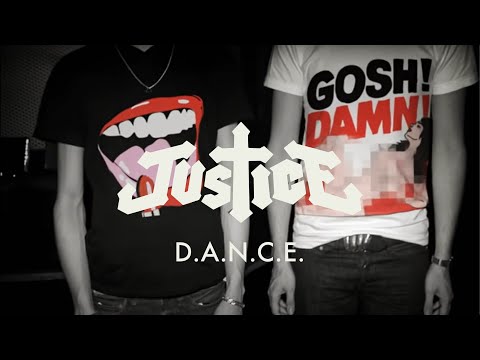
| 12 | D.A.N.C.E. Justice | 2007 | Second wave. Children’s choir spelling DANCE over electro-house. The indie club anthem of 2007. |
| 13 | Gym Tonic Thomas Bangalter and Mr. Oizo | 1999 | One of the most creative French Touch productions. Used a Jane Fonda workout video for the promotional material. Bangalter at his most playful. |
| 14 | Get Lucky Daft Punk ft. Pharrell Williams | 2013 | Grammy for Record of the Year. Nile Rodgers on guitar. French Touch’s greatest pop moment and its formal global recognition. |
| 15 | Audio Video Disco Justice | 2011 | Justice at their most cinematic and ambitious. The title track from their second album shows French Touch evolving into something bigger. |
The 2020s French Touch Revival: Why It Never Really Left
In 2025 and 2026, French Touch is experiencing its most significant revival since the early 2000s. Several forces are driving this simultaneously, and together they suggest that the movement’s influence on electronic music is permanent rather than periodic.
The Vinyl Revival and Crate Digging Culture
The global vinyl revival has brought a new generation of listeners directly to the source material of French Touch. Young producers buying second-hand records at flea markets are finding the same 1970s funk and disco records that Daft Punk and Cassius sampled in the 1990s, and they are processing them through software filters that replicate the SP-1200 and Alesis 3630 sound with remarkable fidelity. The aesthetic is being recreated with complete awareness of its origins.
Thomas Bangalter’s Return
After Daft Punk separated in 2021, Thomas Bangalter has remained active as a solo artist and DJ. His unexpected B2B DJ set with Fred again.. at Alexandra Palace in London in 2025, playing “Music Sounds Better With You,” “Around the World,” and other French Touch classics alongside contemporary electronic music, was one of the most significant moments in recent electronic music culture. The audio recording became one of the most-streamed DJ mixes of the year.
Justice and the New Generation
Justice continue to release music and tour internationally, connecting the original French Touch scene to contemporary club culture. Their influence on the current generation of producers is profound, and their work for the Paris 2024 Olympics opening ceremony brought the French Touch aesthetic to the largest global audience it has ever had.
Nu-Disco and Filter House Today
The Nu-Disco movement that emerged in the late 2000s with artists like Chromeo, Todd Terje, and Prins Thomas is the direct aesthetic descendant of French Touch, using the same filtered disco approach with contemporary production tools. In 2025, producers including Alan Braxe and DJ Falcon have released new music that is indistinguishable in spirit from their 1998 peak work, proof that the French Touch approach is not exhausted but endlessly renewable.
Most electronic music movements sound dated within a decade. French Touch does not. The reason is that its foundations are in the warmth of analogue recordings, in the physicality of real disco and funk performances from the 1970s. When you filter a Chaka Khan sample through a low-pass filter, you are working with something genuinely human and genuinely musical at its core. The technology is of its time but the soul of the source material is timeless. That is why French Touch tracks made in 1997 and 1998 still fill dancefloors in 2026.