Lizzy Mercier Descloux: The French No Wave Pioneer Who Invented Worldbeat Before It Had a Name
Punk provocateur. No wave original. The woman who recorded in Soweto before Graceland and got Chet Baker on tape one last time.
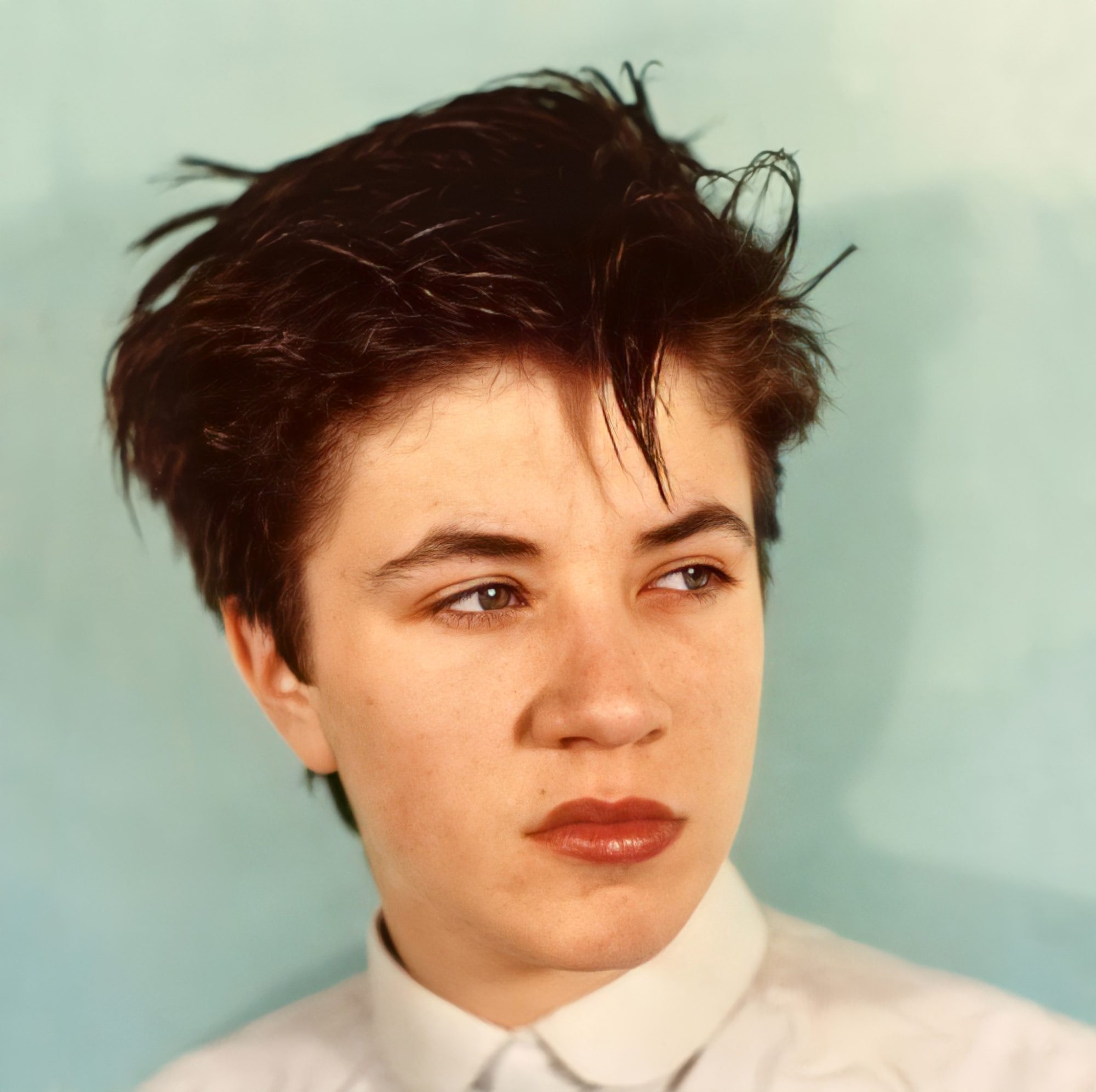
Lizzy Mercier Descloux, the French artist who refused every category music tried to put her in.
Overview
Who Was Lizzy Mercier Descloux?
Lizzy Mercier Descloux (born Martine-Elisabeth Mercier, December 16, 1956, Paris; died April 20, 2004, Saint-Florent, Corsica) was a French singer, songwriter, guitarist, painter, poet and actress who became one of the defining figures of New York’s no wave scene and, without ever chasing the title, one of the first true worldbeat pioneers in popular music.
Her resume reads like a secret history of the late 20th century underground. She co-founded the punk boutique and magazine that ignited the French punk scene. She shared a New York loft with Patti Smith. She recorded her debut on ZE Records, the legendary label her partner Michel Esteban co-founded. She cut an album at Compass Point in Nassau while Grace Jones made Nightclubbing next door. She recorded with Soweto musicians in apartheid-era South Africa two full years before Paul Simon’s Graceland. And she convinced Chet Baker to play trumpet on what became some of his final studio recordings.
Yet for decades she remained what one critic called “a footnote to other people’s careers.” That has changed. Since Light in the Attic Records reissued her catalog, and since Patti Smith wrote the foreword to the 2025 reissue of her book Desiderata, Lizzy Mercier Descloux has been rightfully reclaimed as what she always was: one of the most fearless and original artists France ever produced.
Origins
Paris: Punk Shops, Rimbaud and Rock News
Born in Paris and raised in Lyon by an aunt who worked at the Renault factory, Lizzy returned to the capital in her teens to attend art school at the Ecole des Beaux-Arts. She was a devotee of Arthur Rimbaud and Jean-Luc Godard, every bit the romantic French archetype, but with an appetite for noise that no poetry seminar could satisfy.
Across the street from her apartment stood a record shop run by a young music obsessive named Michel Esteban. The two fell in love and became the twin engines of French punk. Together they ran Harry Cover, the Parisian boutique that became the temple of the French punk movement, France’s answer to Vivienne Westwood and Malcolm McLaren’s SEX shop in London. In 1976 they launched Rock News, the new wave magazine that documented the punk explosion for French readers with a pure DIY ethos.
She taught herself guitar in a deliberately rudimentary way, inspired by minimalist French punk bands like the Stinky Toys. Technique never interested her. Expression did.
In 1975, at age 18, she visited New York for the first time and struck up friendships with Patti Smith and Richard Hell, both of whom contributed material to her first book, Desiderata. A famous 1976 photoshoot shows Lizzy and Patti posing as Arthur Rimbaud and his sister Isabelle: Lizzy in an oversized suit, collar undone, radiating the nonchalant androgynous cool that would later make her a fashion reference for a new generation.
The Scene
New York: No Wave, ZE Records and the Loft with Patti Smith
In 1977, Lizzy and Esteban moved to New York permanently, landing in the middle of the most radical music scene in America. She saw Patti Smith and Television at CBGB. She watched Jean-Michel Basquiat perform at the Kitchen. Downtown Manhattan was burning with the sound of no wave: the atonal, confrontational anti-genre that rejected punk’s rock and roll roots entirely.
Esteban partnered with Michael Zilkha to found ZE Records in 1978, the label that would define the mutant disco sound with artists like James Chance, Cristina, Was (Not Was) and Suicide’s Alan Vega. Lizzy became one of its first and most vital signings.
Rosa Yemen: The Art-Punk Prelude
Her first release came in 1978 under the name Rosa Yemen, a performance art duo with guitarist D.J. Barnes. The self-titled EP, recorded at Bob Blank’s Blank Tapes studio, is pure no wave: harrowing guitar vignettes over which Lizzy yelped fragmented declarations in French and English. She loved that it had no commercial ambitions whatsoever.
“ZE knew it wouldn’t go anywhere, that nobody would buy it, and they were just doing it and paying for it and it was great.”
Lizzy Mercier Descloux on the Rosa Yemen EPThe Debut
Press Color: The Debut That Made Dance Music Dangerous
In February 1979, Lizzy returned to Blank Tapes for just ten days and emerged with Press Color, one of the defining documents of the no wave era and arguably the first great mutant disco album. The formula was unprecedented: elementary guitar riffs, minimalist production, dance grooves and her signature deadpan vocal delivery, disinterested and magnetic at once.
The album is best remembered for her radical deconstruction of Arthur Brown’s “Fire,” transformed into a skeletal disco stomp, and for “Wawa,” which became one of the defining tracks of the entire no wave movement. Her joyously unhinged take on the “Mission Impossible” theme showed a playfulness most of her downtown peers could never allow themselves.

Lizzy Mercier Descloux performing “Mission Impossible” live: no wave irreverence at its purest.
Press Color fared poorly commercially in America, where distribution priorities lay elsewhere, but received enthusiastic notices across Europe. More importantly, it caught the attention of Island Records founder Chris Blackwell, who opened the door to the next chapter.
The Reinvention
The African Turn: Mambo Nassau and Zulu Rock
Thanks to Blackwell, Lizzy and Esteban traveled to Compass Point Studios in Nassau, Bahamas, the same legendary facility where Grace Jones was recording Nightclubbing at that very moment. Working with keyboardist and producer Wally Badarou, she created Mambo Nassau (1981): a churning fusion of African rhythms, alternative rock, American funk and soul that critics have compared to Talking Heads’ “I Zimbra” era, except Lizzy got there on her own path.
The album flopped in America but succeeded in France, earning her a deal with CBS France, and set up the boldest move of her career.
Soweto, 1984: Two Years Before Graceland
In 1984, Lizzy traveled to Johannesburg and Soweto in apartheid-era South Africa to record with local township musicians. The result, Zulu Rock, blended mbaqanga rhythms with her French new wave sensibility into something nobody had heard before. When Paul Simon released Graceland in 1986 to worldwide acclaim for its South African collaborations, Lizzy had already been there, done that, two years earlier, with none of the marketing machine and all of the risk.
The Hit
Mais Ou Sont Passees Les Gazelles: The Song France Fell in Love With
“Mais ou sont passees les gazelles?” (But where have the gazelles gone?) became Lizzy’s biggest commercial success and remains her signature song. Built on an irresistible South African groove and sung with a lightness that hides real melancholy, it turned the eternal outsider into a genuine chart presence in France.

“Mais ou sont passees les gazelles”: the Soweto-recorded single that became her biggest hit in France.
The song’s success was sweet vindication for an artist who had spent her whole career being told her music was too strange, too hybrid, too uncategorizable to sell. For once, France agreed with her instincts.

Another performance of “Les Gazelles,” showing the effortless charisma that made her a French television favorite in 1984.
The Masterpiece
Rio, Chet Baker and One for the Soul
Lizzy’s original plan for her fourth album was almost too beautiful to exist: a New Orleans session uniting Cajun and zydeco players with the South African musicians she had met in Soweto. Apartheid authorities killed it by refusing the South Africans’ visas.
So she went to Rio de Janeiro instead. Working with producer Adam Kidron and a crew of Brazilian musicians, she recorded One for the Soul (1986), her first album for Polydor. Its quiet legend rests on one extraordinary guest: jazz icon Chet Baker, whose fragile, luminous trumpet graces several tracks. They would prove to be among the final studio recordings of Baker’s life; he died in 1988.
Commercially the album could not match Zulu Rock, but time has been kind. Many now regard One for the Soul as her deepest and most affecting work: the sound of a restless traveler finally standing still long enough to feel everything.
Her final album, Suspense (1988), was recorded in England and partly produced by Mark Cunningham of the no wave band Mars, an old friend from the New York days. After it, she walked away from the music industry entirely. She was 32.
The Last Chapter
The Final Years: Painting, Corsica and Silence
The last decade and a half of Lizzy’s life was nomadic and deliberately quiet. She lived in Africa, France, New York, South America and the West Indies, trading the microphone for the paintbrush and the pen. She acted occasionally, contributed songs to film soundtracks, painted seriously, and settled eventually in Saint-Florent, Corsica, on the Mediterranean.
In 2003 she was diagnosed with ovarian and colon cancer. She died on April 20, 2004, at age 47. Her ZE labelmate Cristina dedicated a song to her that year: “chere copine in adversity… In loving memory of her talent, her courage, and her kindness.”
She died, as several obituaries noted, in relative obscurity. It would not last.
The Afterlife
Legacy: Why Lizzy Mercier Descloux Matters More Than Ever
The rediscovery began in earnest when Light in the Attic Records, working with Michel Esteban, reissued her entire catalog in 2015 and 2016 to rapturous critical reappraisal. The Village Voice called it the illumination of “the hidden history of a no wave pioneer.” Billboard celebrated the return of her “genre-defying work.”
The literary world followed. In 2019, French journalist Simon Clair published the first book-length biography, Lizzy Mercier Descloux, une eclipse. In 2022, Brooklyn’s Inpatient Press reissued her book Desiderata in English translation, and the expanded 2025 edition arrived with a foreword by Patti Smith herself, distributed by Penguin Random House. In 2023, a collection of 78 personal letters, Don’t Take Care of Yourself, was published in Paris with collages and photographs from her archive.
Her fashion sense, masculine tailoring, undone collars, zero effort and total confidence, has been rediscovered by style publications as a blueprint decades ahead of its time. Her records circulate among DJs and crate-diggers as secret weapons. Her refusal to stay in one genre, one country or one identity reads today not as career suicide but as prophecy.
“Descloux seemed to be in her own league entirely, even within the non-conformity of the no wave scene.”
Far Out MagazineEvery borderless artist of the streaming era, every French act that records in Lagos or Kingston or Sao Paulo without a second thought, is living in a world Lizzy Mercier Descloux imagined first.
Discography
Lizzy Mercier Descloux: Complete Albums
Rosa Yemen (EP)
No Wave · Art Punk
Her recording debut as a performance art duo with guitarist D.J. Barnes. Fragmented, harrowing, uncompromising. ZE Records’ fifth-ever release.
Press Color
No Wave · Mutant Disco
The essential debut. Recorded in ten days. Home of “Fire,” “Wawa” and “Mission Impossible.” A cornerstone of the entire mutant disco genre.
Essential listening
Mambo Nassau
Afro-Funk · Post-Punk
Recorded at Compass Point with Wally Badarou while Grace Jones worked next door. African rhythms meet alternative rock and American soul.
Zulu Rock
Worldbeat · Mbaqanga Fusion
Recorded with Soweto musicians two years before Graceland. Includes her biggest hit “Mais ou sont passees les gazelles?” A pioneering worldbeat landmark.
Her commercial peak in France
One for the Soul
Brazilian Jazz-Pop
Recorded in Rio with Chet Baker on trumpet, among his final studio recordings. Now regarded as one of her strongest and most moving works.
Suspense
Art Pop
Her farewell, recorded in England with no wave veteran Mark Cunningham co-producing. After this, she left music for painting and writing.
All albums were reissued by Light in the Attic Records in 2015-2016 and are available on streaming platforms and vinyl.
FAQ
Everything You Need to Know About Lizzy Mercier Descloux
Who was Lizzy Mercier Descloux?
Why is she called the “French Patti Smith”?
What is Lizzy Mercier Descloux’s most famous song?
Did she really record in South Africa before Paul Simon’s Graceland?
What is Chet Baker’s connection to Lizzy Mercier Descloux?
What was ZE Records?
How did Lizzy Mercier Descloux die?
Where can I listen to her music today?
Explore More
Discover More French Music
Share This

[…] the same idea: the past, filtered. If that interests you, start with Jean-Michel Jarre, Jacno and Lizzy Mercier Descloux, three artists who built the road French Touch later drove […]