
Luiza
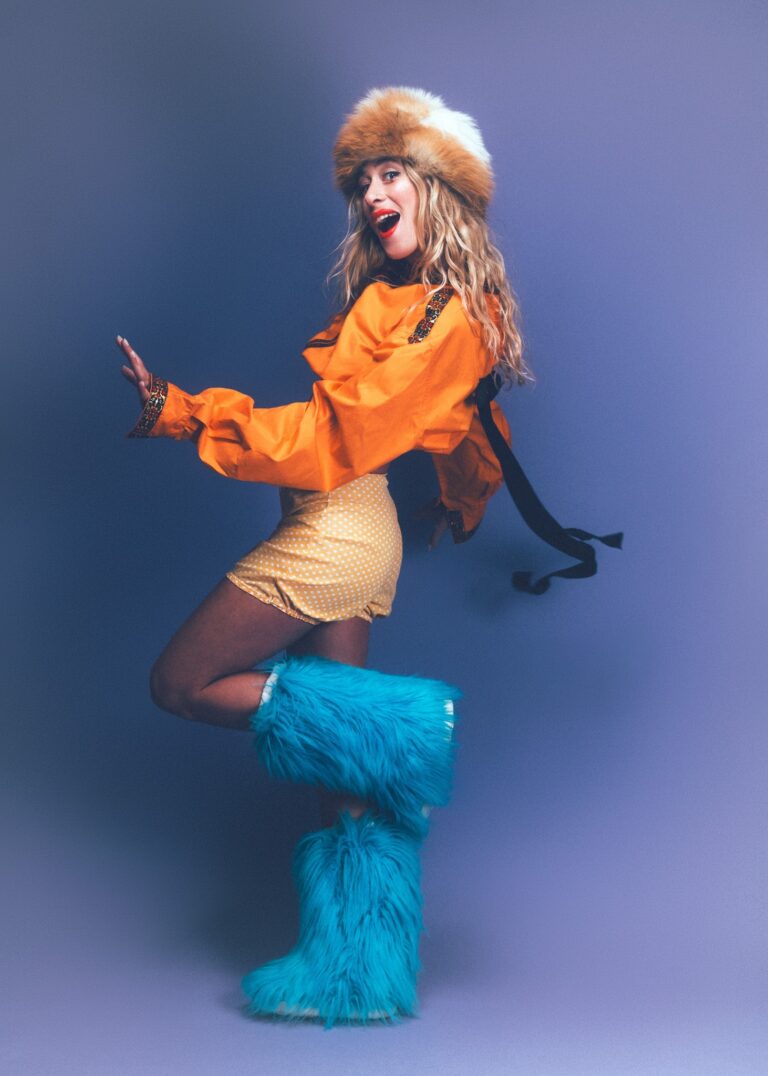
Who Is Luiza? The Story Behind France’s Brightest New Voice
Luiza is the stage name of Luiza Fernandes Viana, a Franco-Brazilian singer, songwriter, and performer born in 1995 in Rennes, Brittany. Her father is a French jazz double bassist who introduced her to the harp, piano, and guitar from childhood. Her mother is a Brazilian contemporary dancer. Music and movement were not hobbies in the Fernandes Viana household — they were the language of daily life.
She trained in classical singing at the Rennes Conservatory until age 15, including opera lessons that gave her voice its distinctive range and control. But formal training was only the beginning. Luiza’s real education came from travel: a period living in Brazil and the Amazon rainforest, discovering the rhythms and traditions of her mother’s country firsthand; a stint studying at the Beaux-Arts de la Réunion in the Indian Ocean, where she encountered maloya, the island’s UNESCO-listed traditional music; and eventually, Paris, where she launched her professional career.
Most French pop artists are either fully French or fully international. Luiza is genuinely neither and both. Her music carries Rennes in its melancholy, Brazil in its rhythm, Réunion in its percussive complexity, and Paris in its production aesthetic. She sings in French, Portuguese, and English sometimes within the same song. This is not a marketing strategy. It is who she is.
From the Streets of Rennes to the Summer Charts
Luiza’s path to her 2025 breakthrough was anything but direct. She spent years building her reputation through collaborations, lending her voice to projects by Fakear, Mahom, and Flavia Coelho, and recording a full dub EP with the mysterious Parisian duo Khoe Wa. She appeared on Taratata, France’s most prestigious music television show, alongside Féfé, where she performed her own songs for a national audience for the first time.
Radio Nova, the Parisian station that has launched more French careers than any other, named her one of their “favorites” after the Bars en Trans festival in Rennes, where she played to a crowd that had never heard of her and left as converts. She had been building something real, something credible, something entirely on her own terms. Then spring 2025 happened.
Soleil Bleu: How a €20 Microphone Made the Song of the Summer
In the spring of 2025, Luiza went into a spontaneous recording session with Bleu Soleil, a Parisian electronic duo formed in 2024 by Antonin Parmentier (alias Kodaman) and Nino Faerdig (alias Nexh). The session was unplanned. The result was “Soleil Bleu”, the song that would define a French summer.
The vocal, which became one of the most recognized voices in France in 2025, was recorded on a microphone that cost €20. The bedroom production, combining electro, dub, and French pop with a reggae beat and lyrics about freedom and independence, had a raw authenticity that contrasted sharply with the polished commercial pop dominating French radio. It sounded like something you discovered rather than something pushed at you.
Released in April 2025, “Soleil Bleu” went viral within weeks. It reached number one on Spotify’s Viral 50 France. It entered the Top 20 on Instagram and TikTok trends simultaneously, with 19 million social media views in its peak period. By the end of August 2025 it had accumulated over 25 million Spotify streams, a figure that continued to grow. The music video, filmed in the streets of Paris, accumulated millions of additional views on YouTube.
“The song literally invaded Instagram stories in France during the summer of 2025.”
French Iceberg, on “Soleil Bleu” by Bleu Soleil and Luiza
Why the Song Worked
In an era of algorithmic music, “Soleil Bleu” succeeded by accident. The lyrics, built around a simple demand for freedom (“Let me live how I want”), resonated with young French audiences who recognized in them a feeling rather than a message. The production, rooted in the dub and reggae traditions that Manu Chao had made beloved in France decades earlier, had a timeless familiarity dressed in contemporary electronic clothes. And Luiza’s voice, trained in classical opera but inflected with Brazilian warmth and Paris cool, was immediately and genuinely distinctive.
Frenchly called it “the heartbeat of an entire summer.” Connexion France described it as having a Leftfield quality, “nothing especially new or innovative, but catchy is catchy.” That honesty is part of what made the reception so interesting: critics and fans alike acknowledged that the song worked on a purely emotional level, bypassing analysis entirely.
Luiza on YouTube and Streaming
Watch Luiza’s official videos and follow her channel for new releases, live performances, and the journey from her Rennes roots to the French summer charts.

The Luiza Sound: Where France Meets Brazil
Luiza’s music is genuinely difficult to categorize, which is both its challenge and its strength. She sits at the intersection of several distinct musical worlds that rarely meet, and makes the meeting sound natural rather than forced.
The French Tradition
The chanson tradition is audible in Luiza’s approach to melody and to language. She treats French with the care of a poet, not just a lyricist, and her classical vocal training gives her phrasing a precision that most French pop artists lack. She is, in this sense, a direct heir to the tradition of Barbara and Francoise Hardy in her attention to the expressive possibilities of the French language.
The Brazilian Heritage
Brazil gives Luiza’s music its rhythmic vitality and its warmth. Her crossovers with cumbia on “Demain demain,” baile funk on “Oxalà,” and Latin pop on “Chica” demonstrate a genuine fluency in South American rhythmic traditions that goes beyond borrowing. This is a musician who grew up with these rhythms in her body before she knew their names.
The Island Influence
Her period on Réunion, studying at the Beaux-Arts and absorbing maloya (the island’s traditional music, added to UNESCO’s Intangible Cultural Heritage list in 2009), left a deep mark on her music. Maloya appears explicitly in “Wadidadu” but its rhythmic complexity and its spirit of resistance and joy run through everything she makes.
The Electronic Present
Paris gave Luiza her electronic sensibility. Her collaborations with Fakear, one of France’s most respected electronic producers, and her work with the dub-electronic duo Khoe Wa, located her music firmly in the French electronic tradition while giving it a distinctly different cultural flavor from the filtered disco of the French Touch era.
Luiza’s Music: Complete Discography
Luiza’s Collaborations and the World She Comes From
One of the most revealing things about Luiza’s career is the caliber of the artists who sought her out before she was famous. The list of her collaborators tells you everything about where she sits in the French musical ecosystem.
The Taratata appearance with Féfé deserves particular attention. Taratata is France’s most prestigious musical television program, the equivalent of a Later with Jools Holland-level endorsement for a French artist. Being invited to appear on Taratata before your debut solo EP exists is a statement about how the French music establishment viewed Luiza’s talent. She played her own songs that night for what may have been the first time to a national audience, and the response was immediate.