
Francois de Roubaix: He Died at 36 and Hip-Hop Brought Him Back to Life
He built a home studio when nobody knew what that was, put synthesizers in French cinema, and vanished into the sea in 1975. Decades later, the cratediggers found him.
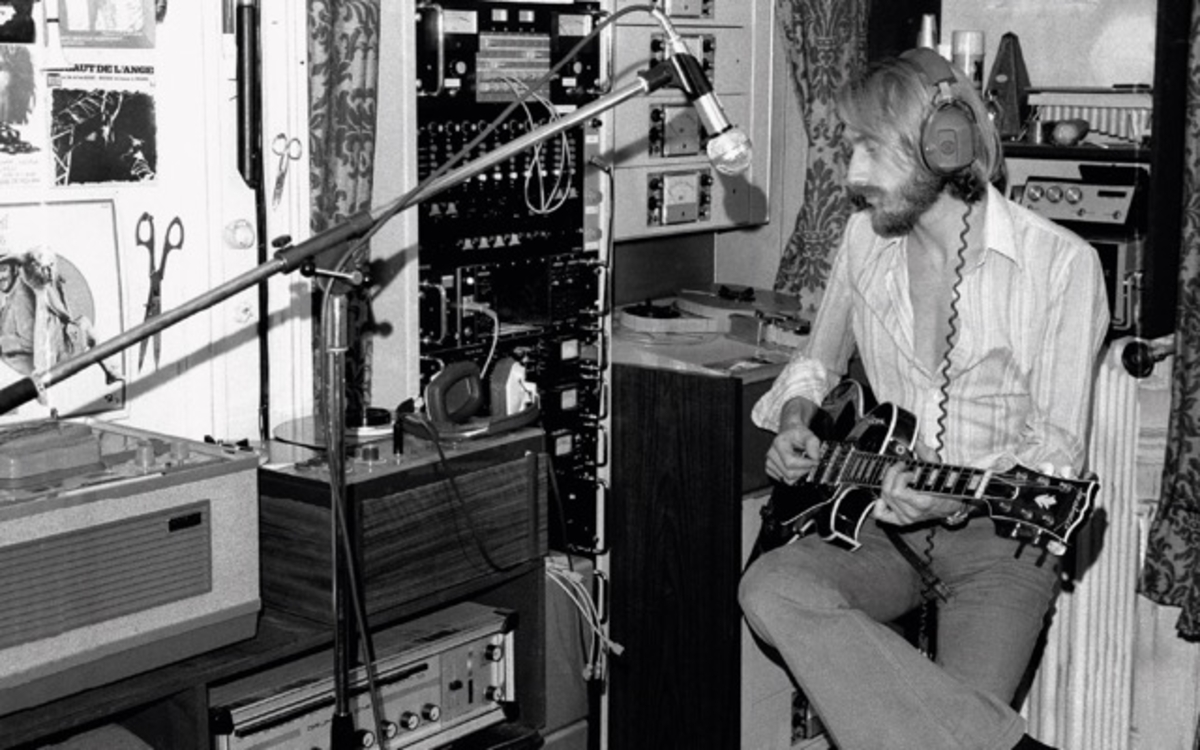
Francois de Roubaix: the tinkerer genius who heard the future in a Paris apartment.
Overview
Who Was Francois de Roubaix?
Francois de Roubaix (born April 3, 1939, in Neuilly-sur-Seine; died November 1975 off Tenerife) was a self-taught French film composer who compressed several lifetimes of invention into a single decade. Between his first feature score in 1965 and his death ten years later, he composed for more than fifty feature films, dozens of shorts, TV series, commercials and jingles, creating a sound world that mixed jazz, folk instruments, exotic textures and, crucially, synthesizers, which he was among the very first to bring into film music.
He scored classics for Jean-Pierre Melville (Le Samourai), Robert Enrico (Les Grandes Gueules, Les Aventuriers, Le Vieux Fusil) and Jose Giovanni (Dernier domicile connu, La Scoumoune). He composed the childhood-defining theme of the animated series Chapi Chapo and the music of Commissaire Moulin. And in 1972 he did something almost nobody on Earth was doing: he built a professional 8-track home studio in his Paris apartment.
Then, at 36, at the peak of a creative rebirth, he dove into the Atlantic and never came back. What happened to his music afterward is one of the great resurrection stories in modern sound.
Origins
The Self-Taught Kid Who Chose Jazz Over the Conservatory
De Roubaix was born into cinema: his father, Paul de Roubaix, produced and directed institutional films, and his mother worked in animation. He discovered jazz at 15, and it changed everything. While the great French film composers of the older generation, Georges Delerue, Maurice Jarre, Michel Legrand, came armed with rigorous classical training, de Roubaix built himself from jazz improvisation, club gigs and an insatiable curiosity for instruments.
That outsider formation became his superpower. He moved with equal delight from electric organ to the Breton biniou bagpipe, from guitar to Indian sitar, marrying instruments nobody thought belonged together. His father gave him his first jobs, scoring educational shorts, which led to director Robert Enrico and, in 1965, his first feature: Les Grandes Gueules. The ten-year run that followed is one of the most astonishing in film music history.
The Golden Run
The Golden Run: Melville, Enrico, Giovanni
The list reads like a syllabus of French cinema’s toughest, coolest decade. For Jean-Pierre Melville he scored Le Samourai (1967), the Alain Delon hitman classic whose icy minimalism still shapes crime cinema worldwide. For Robert Enrico he wrote the adventurous, wide-open music of Les Aventuriers (1967) with Delon and Lino Ventura. For Jose Giovanni he delivered Dernier domicile connu (1970), whose obsessive violin theme would later have a second life nobody could have predicted, and the gangster drama La Scoumoune (1972).
Television got the same genius: the knights-of-the-sky serial Les Chevaliers du ciel, the Red Sea adventures of Les Secrets de la mer Rouge, the cop show Commissaire Moulin, and the stop-motion children’s classic Chapi Chapo (1974), whose toy-box melody is engraved in the memory of generations of French children. He even composed the Gaumont logo jingle and SNCF idents. A workaholic with the soul of a tinkerer, he treated every format, from feature film to advert, as a laboratory.

The INA archives’ portrait of de Roubaix: rare footage of the composer at work, preserved by France’s national audiovisual institute.
The Revolution
1972: The Home Studio Before Home Studios Existed
Here is where de Roubaix stops being a great composer and becomes a prophet. In 1972, in his Paris apartment on rue de Courcelles, he assembled one of the very first 8-track home studios in the world. Early synthesizers, drum machines, tape machines and traditional instruments filled the room, and there he composed, layered and finalized his scores, calling on his loyal sound engineer Jean-Pierre Pellissier when real strings or drums were needed elsewhere.
Understand what this meant in 1972: professional music was made in expensive commercial studios, full stop. The idea that an artist could produce finished, broadcast-ready music alone at home, stacking tracks, sculpting electronic textures, mixing acoustic warmth with synthetic strangeness, was science fiction. De Roubaix simply built it, years before the technology became an industry and decades before the laptop made everyone a bedroom producer.
On his final score, Le Vieux Fusil (1975), he pushed further still, designing unsettling electronic sounds on his synthesizers to blend with the film’s flamethrower horror, prefiguring the modern craft of sound design itself.
The Other Love
The Sea: His Other Great Love, and His Last
Music shared de Roubaix’s heart with one rival: the ocean. A devoted scuba diver, he poured that love into his work, from the Red Sea adventure serial to the marine textures that ripple through his scores. His music even accompanied the underwater cathedral images of Commandant Cousteau’s Voyage au bout du monde, the Antarctic expedition documentary.

“L’Antarctique”: de Roubaix’s music over the polar images of Cousteau’s Voyage au bout du monde. The composer and the sea, together one last time.
On a November day in 1975, exploring an underwater cave off Tenerife in the Canary Islands, Francois de Roubaix died in a diving accident. He was 36 years old. He had been due to compose the score for Jose Giovanni’s next film, Le Gitan. The most inventive sound laboratory in France went silent overnight.
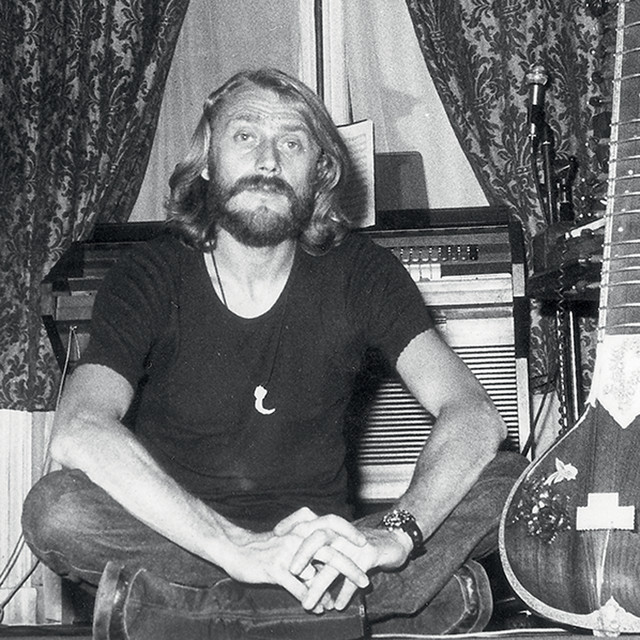
A career of barely ten years, an influence still expanding half a century later.
The Farewell
1976: A Cesar for a Ghost
Months after his death, French cinema held the very first Cesar Awards ceremony in 1976. Le Vieux Fusil, starring Philippe Noiret and Romy Schneider, swept the night: Best Film, Best Actor, and Best Music for Francois de Roubaix, awarded posthumously. The first music Cesar in history went to a man who was no longer there to receive it. In 1977, a second posthumous Cesar followed, for best short fiction film, honoring his parallel work as a filmmaker.
And then, gradually, the silence. Through the 1980s and much of the 1990s, de Roubaix’s name faded from public memory, kept alive mainly by film music devotees. The story could have ended there. It did not, because a new generation was about to go digging.
The Resurrection
The Resurrection: How Hip-Hop Found Him
Hip-hop is built by cratediggers: producers who hunt forgotten vinyl for the perfect loop, the drum break nobody remembers, the melody that hits different. And in the dusty bins of French soundtrack records, they struck gold. De Roubaix’s scores, with their hypnotic riffs, warm analog textures and cinematic moods, turned out to be a sampling goldmine.
The electronic world joined the revival: Air and Sebastien Tellier profess boundless admiration for him, hearing in his apartment recordings a direct ancestor of the French Touch aesthetic. Compilations, reissues, a biography and tributes followed, including Vincent Delerm’s 2008 song “Et Francois de Roubaix dans le dos.” Every sample, every reissue, every needle drop on a rediscovered soundtrack pulled the man a little further out of oblivion.
The Verdict
Legacy: Patron Saint of the Bedroom Producer
Half a century after his death, Francois de Roubaix stands revealed as one of the great secret architects of modern music. The home studio he improvised in 1972 became the default way music is made on Earth. The marriage of electronic and acoustic sound he pioneered is now simply how records sound. The scores dismissed in his lifetime as craftsman’s work are studied, sampled, reissued and revered by cratediggers from Paris to Los Angeles.
He belongs to the same French lineage of ahead-of-their-time visionaries as Jacno, who sketched the French Touch from a synthesizer in 1979, and Lizzy Mercier Descloux, who invented worldbeat before the word existed. Like them, he was too early. Like them, time caught up and proved him right.
He died at 36 in the silence of an underwater cave. Hip-hop gave him back his voice, one loop at a time.
Discography
Francois de Roubaix: Essential Soundtracks
Les Grandes Gueules
Film Score · Robert Enrico
His first feature score, launching the partnership with Robert Enrico and a ten-year run of relentless invention.
Le Samourai
Film Score · Jean-Pierre Melville
The icy, minimal music of Melville’s hitman masterpiece with Alain Delon. A cornerstone of cool that still echoes through crime cinema.
Essential listening
Les Aventuriers
Film Score · Robert Enrico
Wide-open, wind-in-the-hair adventure music for Delon and Ventura. One of the most beloved themes in French cinema.
Dernier Domicile Connu
Film Score · Jose Giovanni
Home of the obsessive violin riff later carried around the world by Robbie Williams’ Supreme. The cratedigger’s holy grail.
The most sampled
Chapi Chapo (TV)
TV Theme · Animation
The toy-box melody that marked generations of French children, from the stop-motion classic. Proof his genius fit any format.
Le Vieux Fusil
Film Score · Robert Enrico
His final film score, blending a heartbreaking piano theme with pioneering electronic sound design.
Posthumous Cesar, Best Music 1976
FAQ
Everything You Need to Know About Francois de Roubaix
Who was Francois de Roubaix?
How did Francois de Roubaix die?
Did he really build one of the first home studios?
Which artists have sampled Francois de Roubaix?
What awards did Francois de Roubaix win?
Why is Francois de Roubaix important for electronic music?
Explore More
Discover More French Music
Share This