The Emily in Paris Soundtrack Every Essential French Song from Netflix’s Hit Series — Classic Chanson to Modern Pop
From Édith Piaf echoing through Montmartre to Angèle on a contemporary Parisian rooftop — the music of Emily in Paris is a love letter to French culture across six decades of sound.
Why the Soundtrack Defines the Series
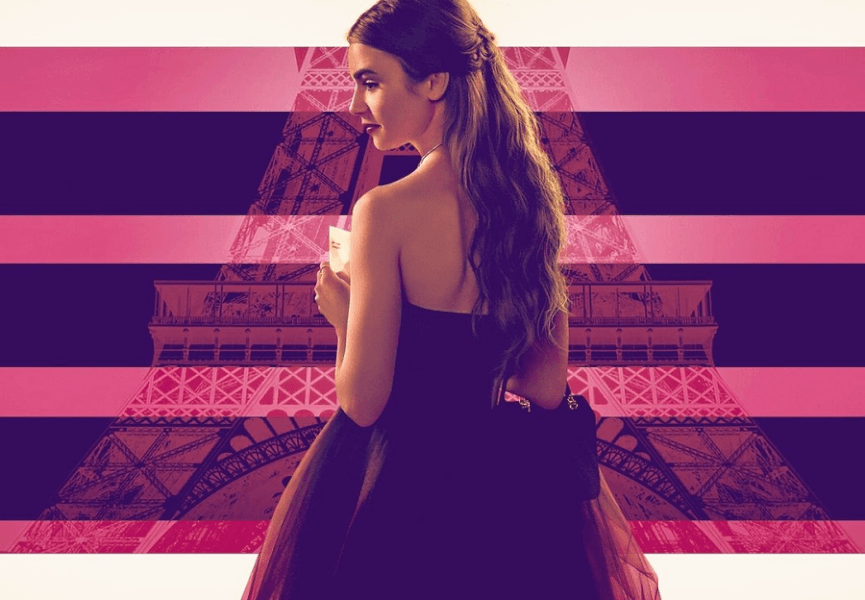
Netflix’s Emily in Paris — created by Darren Star and starring Lily Collins as Emily Cooper, an American marketing executive relocating to the French capital — is many things at once: a fish-out-of-water comedy, a fashion editorial in motion, and a love letter to Paris. But what transforms it from visually appealing to genuinely atmospheric is the music.
The show’s soundtrack functions as a character in its own right. When Édith Piaf’s voice fills a scene set in a Montmartre café, the show is not just illustrating Paris — it is invoking a specific myth of Paris, one that exists simultaneously in the past and the present. When Clara Luciani’s La grenade plays over a contemporary moment, the show signals that this version of Paris is not a museum exhibit but a living city with a current culture.
This combination of classic chanson and contemporary pop, of artistic legacy and current chart success, is what makes the Emily in Paris soundtrack more interesting than most television scores. It is not background music. It is an argument about what French culture is and has been.
Classic French Artists in Emily in Paris
The show draws from the deepest well of French popular music — the mid-20th century golden age of chanson, when Paris exported a sound that defined what “French music” meant to the entire world. These are the artists who built that sound.
The “Little Sparrow” — born on a Belleville street (or so the legend goes) and destined to become France’s most iconic voice. Her music is inseparable from the popular imagination of Paris.
Provocateur, poet, enfant terrible. Gainsbourg redefined what French pop music could say and how far it could go. His 1969 duet with Jane Birkin remains one of the most recognizable French recordings ever made.
The embodiment of Parisian cool in the 1960s — elegant, melancholic, effortlessly sophisticated. Her style was as influential as her music, and both have aged remarkably well.
Sharp, sardonic, perfectly Parisian. Dutronc captured the city at its most irreverent — his “Il est cinq heures, Paris s’éveille” is one of the great urban song portraits in any language.
Actress before singer, but her recordings carry the same irresistible playfulness as her screen presence. BB brought sexuality and lightness to French pop in ways that still echo.
French-Armenian chansonnier whose emotional directness and vocal precision made him one of the most beloved French artists globally. Called by some the “Frank Sinatra of France.”
These artists represent what the French call la chanson française — a tradition in which the lyrics are as important as the melody, the voice as important as the production, and the emotion as important as the craft. Emily in Paris uses their music not simply as background but as cultural argument: Paris is this music, and this music is Paris.
Contemporary French Artists
Alongside the classics, Emily in Paris makes a consistent case for the vitality of contemporary French-language music. The show’s contemporary selections represent a French pop scene that is genuinely diverse, stylistically adventurous, and thoroughly modern.
Isabelle Geffroy, known as Zaz, blends jazz, gypsy music, acoustic pop, and chanson into a sound that is entirely her own. “Je veux” became an international hit and one of the defining French pop songs of the 2010s.
An experimental vocalist and composer whose work sits somewhere between art pop, a cappella, and avant-garde. Camille’s voice is one of the most distinctive in contemporary French music.
The electropop trio bringing energetic, Daft Punk-adjacent French electronic pop into the show’s contemporary scenes. “Que veux-tu” captures the vibrant Parisian club scene Emily enters.
Belgian-born but entirely French-language, Angèle is one of the biggest pop stars in the French-speaking world. “Balance ton quoi” — her response to the #MeToo movement — became a generation-defining anthem.
One of the most compelling voices to emerge from the French pop renaissance of the 2010s. “La grenade” — written in the aftermath of her breakup — became a feminist anthem with a deceptively sweet melody.
Héloïse Letissier (now releasing as Redcar) is one of the most singular artists France has produced in decades — a performer of extraordinary physical presence and deeply personal pop songwriting.
The electronic duo Justice appears in the series with “D.A.N.C.E.” — connecting Emily in Paris to the French Touch movement that Daft Punk, Air, and Cassius pioneered in the late 1990s. Paris has been as influential in electronic music as in any other genre, and the show acknowledges this. Explore the full history of the movement: French Touch Guide →
10 Essential Songs from Emily in Paris
These are the tracks most closely associated with the series — a condensed tour through six decades of French music, from the quintessential to the contemporary.
The song that defines French romanticism. Its appearance in Season 1 sets the emotional tone for Emily’s entire Parisian journey — the city as a place where love is not just possible but inevitable.
Classic Chanson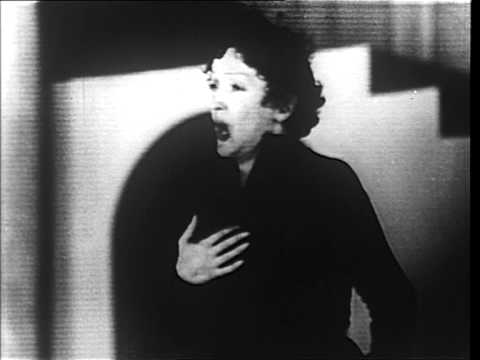
Banned by the BBC. Condemned by the Vatican. Number one in multiple countries. No recording captures French passion — and French provocation — quite like this. Its presence in the show needs no explanation.
French Pop / Chanson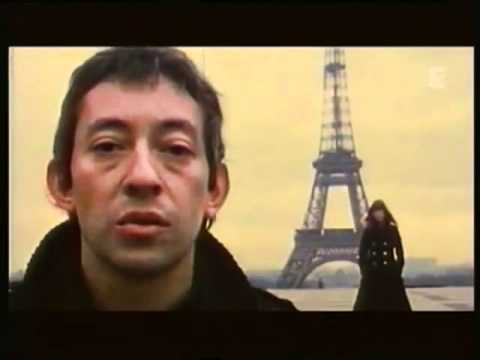
A declaration of wanting joy over money, freedom over luxury. Zaz’s breakout single brought acoustic jazz into French pop and became an anthem for a generation of listeners who discovered French music through it.
Contemporary French Pop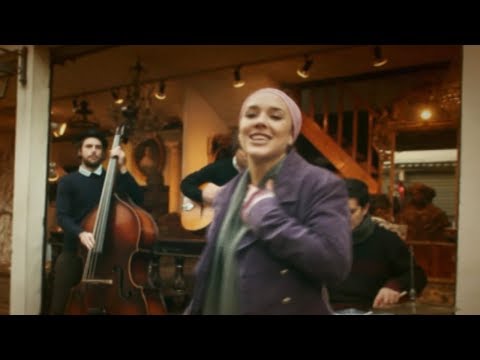
Energetic, slightly surreal electropop — perfect soundtrack for Emily’s more chaotic Parisian adventures. Yelle’s music represents the contemporary club culture of Paris that runs beneath the surface of café-and-beret clichés.
French Electropop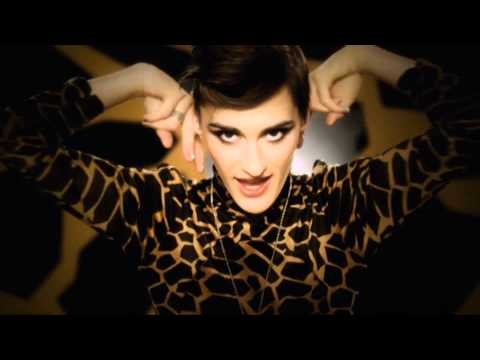
Originally adapted from “It Hurts to Say Goodbye” by Arnold Goland and Jack Keller, Hardy’s French version became its own classic — a study in elegant heartbreak. No one did melancholy quite like Hardy in her prime.
French Yéyé / Pop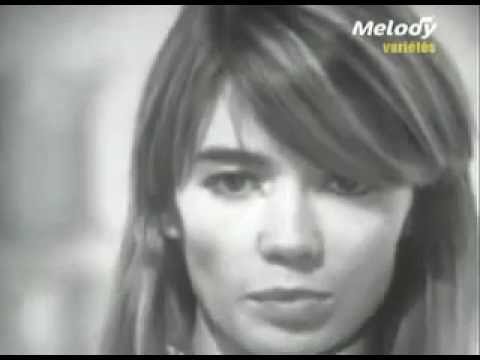
An extraordinary example of what contemporary French music can be — experimental, emotionally raw, rooted in the body and the voice. Camille’s approach to pop is unlike anyone else working in French music today.
Art Pop / French Alternative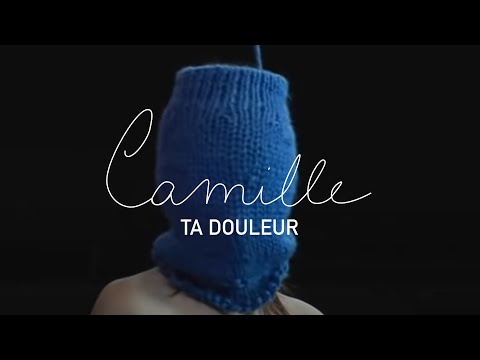
One of the great urban songs about any city, anywhere. Dutronc narrates Paris waking at dawn with the detached amusement of someone who has been out all night watching it happen. A song that rewards repeat listening in both languages.
French Pop / Classic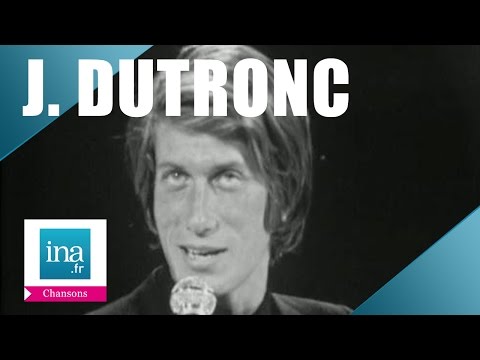
Playful and utterly charming. Bardot’s musical output is often overlooked in favor of her cinematic legacy, but she made some genuinely delightful recordings — and this is among the most purely enjoyable.
French Yéyé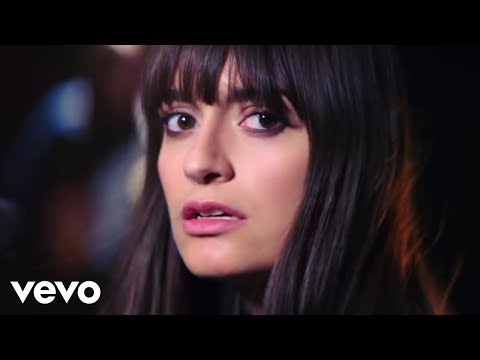
Clara Luciani’s breakthrough single: a song about emotional devastation dressed up in an impossibly catchy melody. The contrast between the lightness of the music and the intensity of the lyrics is very much a French pop tradition.
Contemporary French Pop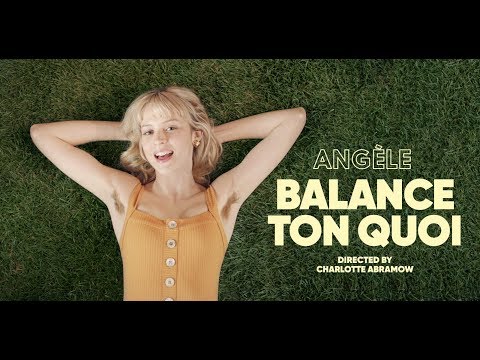
Belgian-born Angèle addresses sexual harassment in French society with a synth-pop track too catchy to look away from. Its inclusion in the series signals that the show, at its best, is interested in contemporary France rather than a frozen postcard of it.
Contemporary Pop / FrancophoneThe Emily in Paris Spotify Playlist
France Music has curated a playlist bringing together the best French songs from across the series — from Piaf to Angèle, classic chanson to contemporary pop. A complete musical tour of Paris in under two hours.
“The soundtrack of the series is an essential part of the viewing experience — it adds an entire emotional dimension to Emily’s Parisian adventure.”
France MusicCultural Impact of the Emily in Paris Soundtrack
The cultural reach of the Emily in Paris soundtrack extends well beyond the viewership numbers. Music that appears in a globally streamed Netflix series behaves differently from music played in a cinema or heard on the radio — it reaches people in their homes, often on repeat, and it arrives attached to vivid scenes that make emotional associations extremely strong.
The show introduced millions of international viewers — particularly in North America, Asia, and Latin America — to both classic and contemporary French-language music, generating measurable increases in streaming for featured artists immediately after episodes aired.
Catchy French-language songs landing in the ears of non-French speakers have a well-documented gateway effect toward language learning. Duolingo and other platforms reported notable spikes in French-language course enrollments correlated with Emily in Paris seasons.
Music and location are inseparably linked in how the show sells Paris. Tourists who visit after watching Emily in Paris frequently seek out the acoustic version of the city — the café ambiance, the street music, the sounds that the show’s soundtrack promised them they would find.
Songs from the 1960s that were already well-known in France but largely unknown to international audiences — Dutronc’s “Il est cinq heures,” Hardy’s “Comment te dire adieu” — found enormous new audiences through the series, introducing younger generations to a tradition they had not previously encountered.
This is what French music’s dual strength — its deep historical archive and its thriving contemporary scene — looks like in practice. The show could not have achieved this effect with music from most other national traditions. French pop has the unusual quality of spanning from the 1940s to the 2020s without ever quite becoming “old fashioned” to outside ears — partly because the tradition itself prizes elegance, and elegance does not age.
Emily in Paris is a starting point, not a destination. Explore more French artists: 10 French Musicians Everyone Needs to Know French Picks The French Touch Guide
The Emily in Paris soundtrack spans over 60 years of French music — from Édith Piaf (1947) to Angèle (2018) — treating French musical culture as a living continuum rather than a museum collection.
The classic chanson artists (Piaf, Gainsbourg, Hardy, Dutronc, Bardot) represent the romantic mythology of Paris that the show invokes in its most emotional scenes.
Contemporary artists (Zaz, Angèle, Clara Luciani, Camille, Yelle, Christine and the Queens) confirm that French-language pop is as vital in the 2020s as it was in the 1960s.
Justice’s “D.A.N.C.E.” connects the show to the French Touch tradition — the electronic movement that made France one of the most influential countries in global music at the turn of the millennium.
The show’s cultural impact includes measurable increases in streaming for featured artists, spikes in French language learning, and heightened interest in visiting Paris.
Frequently Asked Questions
Key tracks include “La Vie en Rose” (Édith Piaf), “Je t’aime… moi non plus” (Gainsbourg & Jane Birkin), “Je veux” (Zaz), “Ta douleur” (Camille), “Comment te dire adieu” (Françoise Hardy), “Il est cinq heures, Paris s’éveille” (Jacques Dutronc), “La grenade” (Clara Luciani), “Balance ton quoi” (Angèle), and “D.A.N.C.E.” (Justice). The soundtrack spans more than six decades of French and French-language music.
Yes. France Music has curated a Spotify playlist at open.spotify.com/playlist/4MutPeE5XPurgFLWlCKUwb featuring the best French songs from the series. The show also has official soundtrack playlists on Spotify updated with each season.
Contemporary artists include Zaz, Angèle (Belgian but French-language), Clara Luciani, Camille, Yelle, Christine and the Queens, Louane, and the electronic duo Justice. Their inclusion confirms that the show is interested in French music as it exists today, not only as a historical artifact.
Four seasons as of 2024. Season 1 premiered October 2, 2020 on Netflix. The series was created by Darren Star and stars Lily Collins as Emily Cooper. Each season has brought new French music into the soundtrack alongside recurring favorites.
Yes, measurably. Streaming figures for featured artists increased notably following episode releases, particularly for classic artists like Édith Piaf and Françoise Hardy, who gained substantial new audiences outside France. Language learning platforms also reported spikes in French-language course enrollment correlated with new seasons of the show.
Paris Is a Sound More French Music on France Music
The Emily in Paris soundtrack is just the beginning of what French music has to offer.