Jean-Pierre
Marcellesi
Who Is Jean-Pierre Marcellesi?
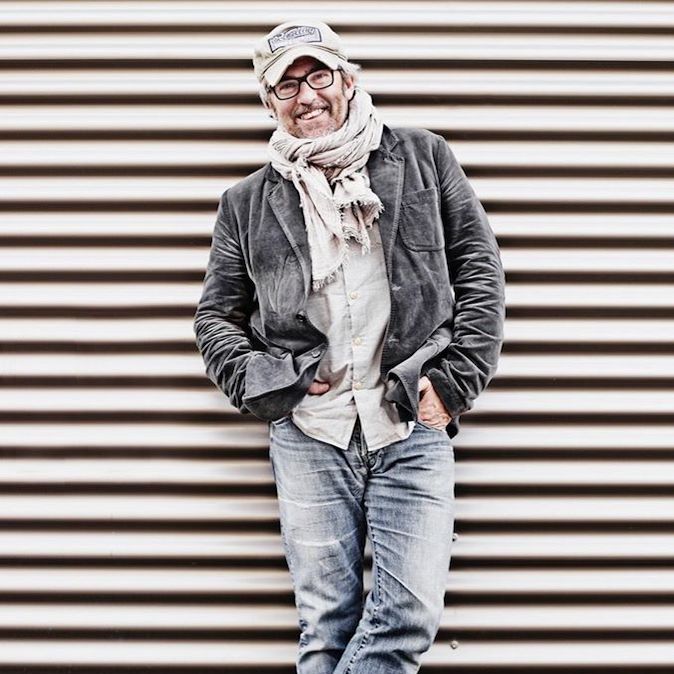
Jean-Pierre Marcellesi is a Corsican musician, singer, guitarist and composer born in Bastia, Corsica, in 1961 to a Corsican father who was a guitarist and a mother of Spanish origin. He describes himself not as a singer or a guitarist but as a melodist — someone whose primary relationship is with melody itself, across whatever instrument or language best serves it.
For over four decades he has embodied the musical soul of Corsica, fusing Mediterranean traditions with samba, mambo, bossa nova, African rhythms and Corsican polyphony in a way that reflects both his island’s history and his own unusually peripatetic early life. He sings in Corsican, French, Italian, Catalan and Portuguese, treating multilingualism as a natural condition rather than a special achievement.
“The guitar is my shield,” Marcellesi has said — a statement that captures both the centrality of the instrument to his identity and his sense that music is a form of protection as much as expression. His work preserves an artisanal essence: led primarily by the inspiration of the moment, he loses himself so completely in the search for the right sound that time disappears.
Bastia, Morocco and the Making of a Melodist
Marcellesi’s early life was shaped by an unusual combination of Mediterranean island culture and North African exposure. Born in Bastia, Corsica’s second city, he spent a significant part of his childhood in Morocco, absorbing North African musical culture alongside the Corsican traditions he had inherited. This North African period is audible in his music’s rhythmic openness — the ease with which African percussion and melodic structures appear alongside Corsican songs and Mediterranean folk.
His musical heritage was immediate and familial: his father was a guitarist and his grandfather was a songwriter and composer, giving Marcellesi two generations of direct musical transmission before he had heard a professional recording. He began his professional career in the early 1980s as a member of the Corsican group I Surghjenti, one of the ensembles engaged in the revival of traditional Corsican polyphonic music in that period.
In 1987, he opened his own cabaret in Corsica called L’Alba, where he performed and refined his musical vision over the following decade. It was in this period that he developed the eclectic fusion style that would define his solo recordings, moving freely between Corsican tradition and the South American, African and Mediterranean influences that had accumulated throughout his life.
Around 1997, Sony Publishing discovered him and engaged him to record his debut. At the same time, he toured Québec alongside his friend and collaborator Yves Duteil, bringing Corsican music to French-speaking Canada and deepening his relationship with the wider Francophone world.
The Marcellesi Sound: Mediterranean Soul, Global Heart
Jean-Pierre Marcellesi’s sound is built on a paradox: it is deeply local and radically open simultaneously. Every record he makes is rooted in the Corsican musical tradition — its melodic vocabulary, its polyphonic heritage, its Mediterranean emotional palette. And every record also reaches outward, toward Brazil, toward Africa, toward the Arabophone world.
His guitar playing is at the center of everything. He uses the guitar not just as an accompaniment instrument but as the primary melodic and rhythmic voice — hence his self-identification as a melodist rather than a singer-guitarist. His compositions are inspired primarily by the moment, preserving a spontaneous, artisanal quality that distinguishes his work from more composed or produced approaches.
He sings in five languages — Corsican, French, Italian, Catalan, and Portuguese — choosing the language that best serves each melody rather than maintaining a linguistic identity. This polyglot approach reflects both his mixed heritage and Corsica’s position as a Mediterranean crossroads.
Jean-Pierre Marcellesi: Official Videos

Jean-Pierre Marcellesi: Complete Discography
Collaborations and Projects
Beyond his solo recordings, Marcellesi has been an active collaborator throughout his career. He composed music for Faudel and Yves Duteil, two of the French-language world’s most beloved artists, demonstrating the reach of his compositional talent beyond the Corsican context. His friendship with Duteil, with whom he toured Québec in 1997, reflects the warmth and collegial quality of his relationships with other artists.
He contributed to the BOF (bande originale de film) of Turf (2012), a group soundtrack project alongside Yves Prevel, Faf Larage and Said. He also participated in Corsica: L’Essentiel (2016), a comprehensive compilation covering the greatest songs of Corsica from classical to contemporary, including Corsican polyphonics.
His Distinu project (2008, with Alan Stevez and Christophe Mondoloni) and his ongoing Corsican cultural ambassadorship reflect a commitment to preserving and transmitting the island’s musical heritage that goes beyond his own recordings. He conducts workshops, collaborates with younger musicians, and remains an active presence in Corsican cultural life.