
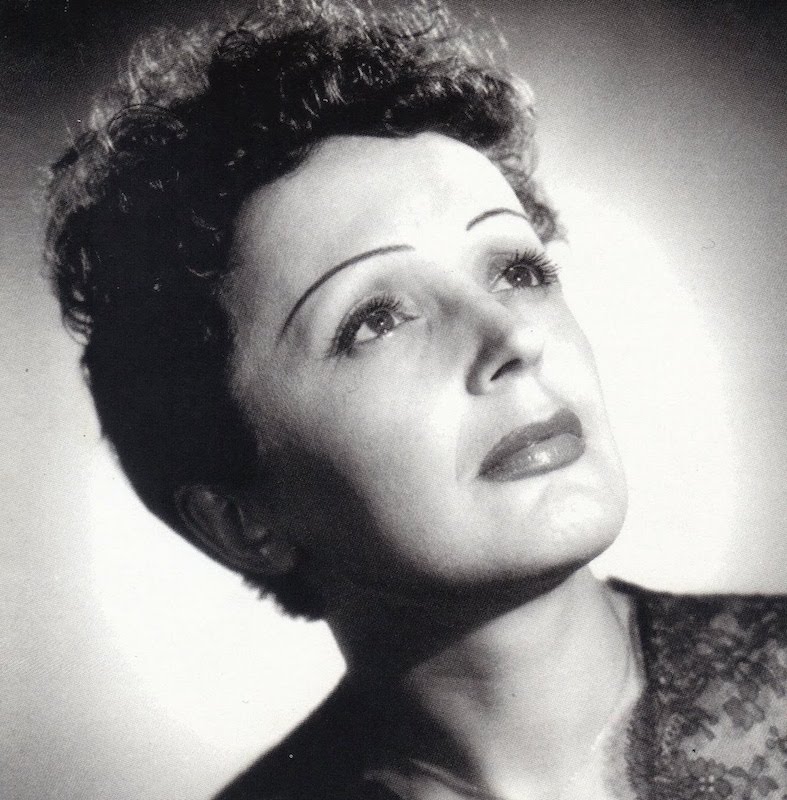
Édith Piaf
La Môme — The Little Sparrow of Paris. France’s greatest voice and one of the 20th century’s most enduring cultural icons.
- Who Was Édith Piaf?
- Childhood: Poverty and the Street
- Discovery and the Cabaret Years
- World War II and the Résistance
- La Vie en Rose: The Song That Changed Everything
- Marcel Cerdan and Hymne à l’Amour
- Watch: Official Videos
- 20 Essential Édith Piaf Songs
- Complete Timeline 1915 to 1963
- Legacy: Film, Museum and Influence
- FAQ
Who Was Édith Piaf?
Édith Piaf (born Édith Giovanna Gassion, December 19, 1915 — died October 11, 1963) was a French singer, actress and composer considered by many to be France’s greatest popular singer of the 20th century, and one of the most iconic voices in the history of recorded music. She was universally known as La Môme Piaf — The Little Sparrow — a nickname that captured both her small, fragile physical presence and the improbable size and power of her voice.
Her singing was rooted in the tradition of the chanson réaliste — the realistic song — a French popular music form that addressed working-class life, love, loss, and suffering with direct emotional honesty. Where other singers of her era performed, Piaf confessed. Her voice carried the weight of a life genuinely lived at the extremes of joy and tragedy, and audiences felt the difference immediately.
Piaf’s official death date and place are listed by Britannica as October 11, 1963, in Plascassier, near Grasse, in the French Riviera. Her biographer Carolyn Burke explains the discrepancy between her official death date and some accounts: she died on October 10 but her death was announced on October 11 — the same day as the death of her friend Jean Cocteau, which contributed to confusion about the timeline.
She is remembered for songs including La Vie en Rose (1946), Non, Je Ne Regrette Rien (1960), Hymne à l’Amour (1949), La Foule (1957), Milord (1959), L’Accordéoniste (1940) and Padam Padam (1951). She wrote approximately 30 of the roughly 200 songs she performed throughout her career.
Childhood: Poverty, Blindness and the Street
Édith Giovanna Gassion was born on December 19, 1915, in the Belleville district of Paris — the high-immigration neighborhood described by novelist Daniel Pennac as the intersection of French working-class culture with the cultures of the world. Her mother, Line Marsa, was a street singer of Moroccan-Kabyle descent who abandoned the family shortly after Édith’s birth. Her father, Louis Gassion, was a travelling acrobat.
Abandoned by her mother, the infant Édith was taken first to her maternal grandmother, then to her paternal grandmother, Maman Tine, who ran a brothel in Bernay, Normandy. It was the prostitutes of this establishment who effectively raised her for her earliest years, feeding and caring for her in the absence of parental attention. Between the ages of approximately 3 and 7, Piaf was blind as a result of keratitis — a corneal inflammation. According to family legend, her sight returned after the prostitutes took her on a pilgrimage to the shrine of Sainte Thérèse de Lisieux, a story Piaf herself repeated throughout her life.
From age seven, she travelled with her father’s acrobatic troupe, singing on the streets of French towns for money. By her early teenage years she was singing alone on the streets and in the courtyards of Parisian working-class neighborhoods, in Belleville, Pigalle, and along the docks of the Seine, surviving through what she earned from passersby. She was 15 when she left her father and began to live completely on her own.
“To tell the story of Piaf is to tell the story of Paris — not the Paris of the grands boulevards, but the Paris of poverty, passion, and the desperate beauty of ordinary life.”
Theatre in Paris, on the life of Édith PiafDiscovery by Louis Leplée and the Cabaret Years (1935 to 1939)
In 1935, at age 19, Piaf was discovered on the streets of Pigalle by Louis Leplée, the owner of the upscale cabaret Le Gerny’s on the Champs-Élysées. He hired her on the spot after hearing her sing, dressed her in the simple black dress that would become her trademark, and gave her the stage name that would follow her forever: La Môme Piaf — the waif sparrow. “Piaf” is Parisian slang for sparrow.
Her debut at Le Gerny’s was an immediate success. Leplée invited prominent figures from Paris’s cultural and social elite to hear her sing, and word spread rapidly. She made her first radio appearance in 1936 and recorded her first hit in 1937: “Mon Légionnaire,” with words by Raymond Asso and music by Marguerite Monnot, distinguished by its bugle-call flourish. Monnot would become the most important musical collaborator of Piaf’s life, composing some of her most beloved songs.
Leplée was murdered in 1936, an event that cast a brief shadow over Piaf’s career as police investigated his social circle. She was cleared of suspicion and her career continued, but the trauma left its mark. She was taken under the wing of Raymond Asso, who became her manager and companion, giving her an intensive musical and personal education that transformed her from a natural talent into a professional artist.
World War II: Collaboration, Resistance and Controversy
Piaf’s conduct during the German occupation of France (1940 to 1944) remains one of the most debated aspects of her biography. She performed for German soldiers and for French prisoners of war held in Germany — acts that appeared to some as collaboration with the occupiers. However, evidence also suggests she may have been involved with the French Résistance, using her concerts as cover to help prisoners obtain identity photographs for escape documents.
The details of her wartime activities remain murky and contested. What is established is that she was not prosecuted for collaboration after the Liberation, unlike some other entertainers, and that she continued her career without interruption. Some biographers suggest her relationships with German officers provided cover for covert activities; others argue she was simply performing wherever she could, as she had always done.
During the occupation, Piaf developed her relationship with actress and intimate companion Marlène Dietrich, whom she had met in the early 1940s. Their friendship was one of the great creative partnerships of both their careers, each finding in the other an artist who matched her own level of commitment and passion.
La Vie en Rose: The Song That Defined a Century
“La Vie en Rose” was first performed by Piaf in 1945 and officially recorded and released in 1946. The song became not merely her signature but arguably the most recognized French song in history — a global anthem for a particular vision of Parisian romance and the transformative power of love. Its title, which translates literally as “Life in Pink” or idiomatically as “Life Through Rose-Colored Glasses,” became synonymous with Piaf herself.
The song was written by Piaf herself, with music by Louiguy (Luis Guglielmi). It was recorded for Columbia Records, reached audiences across France and immediately abroad, and eventually entered The Grammy Hall of Fame in 1998 — one of a very small number of non-English language songs to receive that recognition. It has been covered by hundreds of artists in dozens of languages and has appeared in films, advertisements, and cultural references so numerous as to be uncountable.
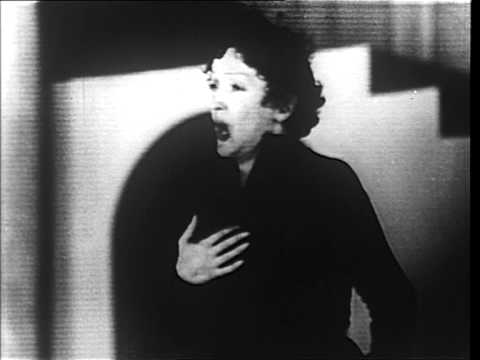
Marcel Cerdan, Hymne à l’Amour and the Years of Loss
In the late 1940s, Piaf fell deeply in love with Marcel Cerdan, the French-Algerian middleweight boxing champion who held the world title from 1948 to 1949. Their affair was passionate, public, and widely reported on both sides of the Atlantic. Cerdan was married, and the relationship was conducted at the intersection of celebrity, scandal, and genuine romantic intensity that Piaf seemed to attract throughout her life.
On October 28, 1949, Cerdan was killed in a plane crash over the Azores as he flew to New York to meet Piaf. The crash, which killed all 48 people aboard, devastated her completely. She was performing at the Versailles club in New York when she learned of his death — and continued the performance, dedicating it to him, because she believed, or said she believed, that he would have wanted her to.
She had already written “Hymne à l’Amour”, the song that became synonymous with their relationship and with her capacity for absolute devotion. Composed with music by Marguerite Monnot, it expresses a love so absolute that it would survive the collapse of the sky and the end of the earth. After Cerdan’s death, the song took on a biographical weight that made it almost unbearable to perform. Piaf performed it anyway, for the rest of her life.
Édith Piaf: Official Videos and Archival Performances
20 Essential Édith Piaf Songs
These are the recordings that define her career, from the early chanson réaliste of the late 1930s to the monumental final recordings of 1960 to 1962. Each is a world in itself.
| Year | Song | Written by | Why It Matters |
|---|---|---|---|
| 1937 | Mon Légionnaire | Asso / Monnot | Her first major hit. Established the chanson réaliste template she would inhabit for life. |
| 1940 | L’Accordéoniste | Michel Emer | Her first million-seller. A bal musette love story that made the accordion Piaf’s instrument. |
| 1946 | La Vie en Rose | Piaf / Louiguy | Her signature. The most recognized French song in history. Grammy Hall of Fame 1998. |
| 1949 | Hymne à l’Amour | Piaf / Monnot | Written for Marcel Cerdan. After his death, became the most emotionally charged song in her repertoire. |
| 1949 | Les Amants de Paris | Delécluse / Senlis / Monnot | One of the great celebrations of Parisian life and love in her entire catalog. |
| 1950 | La Goulante du Pauvre Jean | Piaf / Monnot | Adapted from “The Poor People of Paris.” Her most successful song in the United States at the time. |
| 1951 | Padam Padam | Norbert Glanzberg / Henri Contet | The obsessive melody that pursues the narrator day and night. One of her most hypnotic performances. |
| 1952 | Au Bal de la Chance | Piaf / Monnot | Named after her autobiography. A song about fate and fortune that she lived personally. |
| 1955 | La Goualante du Pauvre Jean | Piaf / Monnot | US hit under the title “The Poor People of Paris” — her greatest American crossover success. |
| 1956 | La Vie en Rose (Carnegie Hall version) | Piaf / Louiguy | Her Carnegie Hall debut in January 1956 is considered one of the greatest concert performances of the 20th century. |
| 1957 | La Foule | Rivgauche / Cabral / Monnot | A crowd at a Peruvian fair, a brief love, a separation. The waltz rhythm pulls lovers apart. A masterpiece. |
| 1958 | Mon Manège à Moi | Glanzberg / Contet | A dizzy, joyful account of being in love. One of her most playful recordings. |
| 1959 | Milord | Moustaki / Monnot | Written by Georges Moustaki. A Paris street woman addresses a melancholy English lord. Her biggest hit of the late 1950s. |
| 1960 | Non, Je Ne Regrette Rien | Dumont / Vaucaire | Composed by Charles Dumont, she almost refused it. 7 weeks at #1 in France. The anthem of no regrets. |
| 1960 | La Vie l’Amour | Piaf / Monnot | One of her final collaborations with Monnot before Monnot’s death in 1961. Deeply personal. |
| 1960 | Mon Dieu | Dumont / Vaucaire | A prayer to God to be allowed to keep her current love, just for a little longer. Piaf at her most vulnerable. |
| 1961 | Les Blouses Blanches | Rivgauche / Monnot | About a woman in a psychiatric hospital watching the white coats come and go. Devastating. |
| 1961 | Le Vieux Piano | Piaf / Dumont | An old piano that has witnessed generations of love and loss. Late Piaf at her most reflective. |
| 1962 | A Quoi Ça Sert l’Amour | Emer / Piaf (with Théo Sarapo) | A conversation about love, recorded as a duet with her last husband Théo Sarapo, 20 years her junior. |
| 1962 | L’Homme de Berlin | Dumont / Rivgauche | Among her final recordings. The voice is different — ravaged by illness — but the commitment is unchanged. |