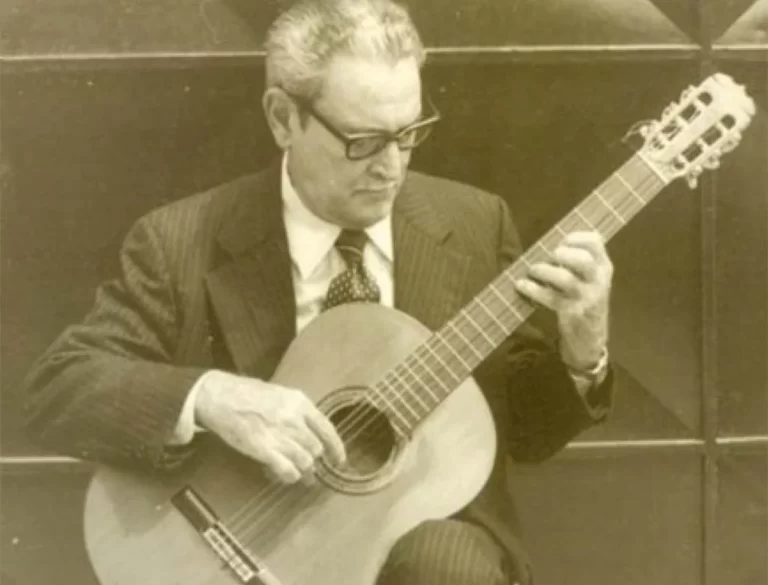
Carlos “Nené” Quintero The Undisputed Master of Venezuelan Percussion — A 50-Year Journey Across the World’s Greatest Stages
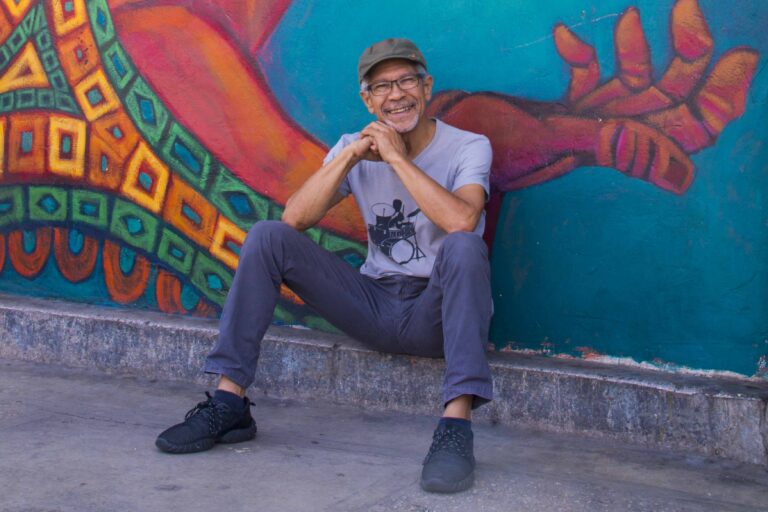
Who Is Carlos “Nené” Quintero?
Carlos “Nené” Quintero — born Carlos Vicente Quintero de Jesús on October 21, 1946 — is the percussionist other percussionists point to when asked who the best is. Over more than five decades, he built a career that is simply without parallel in Venezuelan music: hundreds of albums recorded, international tours with global superstars, and two original percussion instruments of his own invention that changed how Latin percussion is played and understood.
He grew up in San Agustín del Sur, Caracas — a neighborhood that is, by any measure, the spiritual home of Venezuelan percussion. He started tapping rhythms at age five, founded one of Venezuela’s first Afro-rock bands at 24, and by his 30s was the most sought-after session percussionist in the country. By his 40s, he was performing in arenas across Europe alongside Eros Ramazzotti. By his 60s, he had a track charting in the Top 10 in Japan.
Ask any Venezuelan musician who the master is and you will hear the same answer: Nené. Not because he plays loudest or fastest — but because he listens deepest. His trademark is color: the idea that every percussion strike should contribute a tonal and textural dimension, not just a beat. “Coloring the percussion,” colleagues say. That philosophy, developed over a lifetime, is what makes him irreplaceable.
San Agustín del Sur: The Neighborhood That Built Him
To understand Nené Quintero, you must understand San Agustín del Sur — the Caracas parish where he was born and raised. Specifically the barrio Marín: one of the most musically dense squares of earth in all of Latin America. San Agustín became the destination for waves of migration from Barlovento, the coastal region east of Caracas that is the heartland of Afro-Venezuelan musical tradition. Bringing drums, rhythms, and communal memory with them, these communities turned San Agustín into a living percussive archive.
Marín, in particular, has been described as the “barrio of percussionists.” It is the cradle of Grupo Madera, the legendary Afro-Venezuelan ensemble, and the home neighborhood of multiple generations of the Quintero family. For Nené, growing up there was not simply inspiration — it was immersion. Music was in every corner, every gathering, every birthday party that bled from house to street.
“I started playing at neighborhood birthday parties. Someone would say ‘so-and-so is having a party,’ and even though we didn’t know anyone there, they’d invite us to play. That’s how it all started.”
His formal studies were modest but deliberate. He learned music theory and solfeo at the Asociación Musical del Distrito Capital, then spent years studying with maestro Daniel Milano — one of Venezuela’s most respected directors, composers, clarinetists, and teachers — and later studied Latin percussion under Pedro “Guapacha” García. He also attended the Escuela de Artes Cristóbal Rojas for seven years. These studies gave formal language to an instinct he already possessed.
The Quintero Dynasty
The name Quintero is not just a surname in Venezuelan music — it is a dynasty. Carlos “Nené” belongs to a family that produced multiple professional musicians across generations, all rooted in the same streets of San Agustín.
His brothers Ricardo “Rico” Quintero and Jesús “Chu” Quintero were both members of Grupo Madera, the beloved Afro-Venezuelan cultural institution that became emblematic of the country’s Black musical heritage. Both Ricardo and Jesús perished in the Orinoco River tragedy — a devastating loss that the entire Venezuelan musical community mourned, and that gave the Quintero name a layer of sorrow alongside its greatness. Another brother, Rafael, settled in Marseille, France, extending the family’s international reach.
Nené’s nephew Luisito Quintero — known as “El Chamo Candela” — became one of Latin music’s most celebrated percussionists in his own right, a key member of the salsa-fusion group Daiquirí and a globally touring artist. It was Luisito who connected Nené to Japanese reggae singer Pushim, leading to the tour and recording that placed them in Japan’s Top 10.
Nené Quintero’s children — raised with his lifelong partner Daysi Gerdel de Quintero — also became musicians and engineers, continuing a lineage that now spans at least three generations of professional artistry rooted in the same Caracas neighborhood.
From Los Dementes to Grupo PAN (1960s–1970s)
Nené Quintero’s first musical instrument was not percussion — it was the cuatro, the traditional four-stringed Venezuelan guitar, which he played in the 1960s. His first professional engagements came through the band Los Dementes, led by Ray Pérez, one of Caracas’s early rock and salsa ensembles where the young musician began to define his identity.
The pivotal moment came in 1970, when Nené and his brother Jesús “Chu” Quintero co-founded a band that began as Los Hijos de Zoila — named for their mother — and quickly transformed into Grupo PAN. The project was radical for its time: a fusion of rock and Afro-Caribbean percussion that drew direct comparisons to what Carlos Santana was doing in Los Angeles, but with far deeper roots in Venezuelan Afro-indigenous rhythms.
Grupo PAN’s 1970 debut album — released on the Souvenir label — is now recognized as a foundational text of Venezuelan Afro-rock. Their music was a genuine synthesis, not an imitation: the rhythmic architecture was Venezuelan at its core, even when the guitars sounded like they could have come from San Francisco.
The Baticonga & The Set McGiver: Two Inventions That Changed Everything
No other Venezuelan percussionist has contributed original percussion instruments to the global vocabulary. Nené Quintero did it twice. His two creations — the Baticonga and the Set McGiver — reflect a lifetime of problem-solving in live performance and recording contexts, and they remain in active use by percussionists worldwide.
The Baticonga is a hybrid between a drum kit and a conga setup, invented by Nené Quintero over the course of the 1970s and named in the 1980s. It uses bass drum, hi-hat, cymbals of varying thicknesses, toms, and a specially designed snare drum whose rim does not protrude above the drum head — allowing it to be struck like a tumbadora (conga) with the hands while still functioning as a snare. The instrument bridges the rhythmic vocabulary of Afro-Latin music and jazz-rock drumming in a single physical rig. Its earliest conceptual antecedent was Nené’s work with Yordano and the Sección Rítmica de Caracas, but the form became fully defined during the Nequin Group era in France. “It keeps evolving,” Quintero has said. “Sometimes I put in an instrument different from what I used in the previous concert.”
Named after the resourceful TV character MacGyver, the Set McGiver is Nené Quintero’s portable, modular percussion arsenal — a “traveling sound library,” as one journalist described it. Its components include a djembé played with brushes, cymbals fitted with rivets for sustained shimmer, a conga head cut to act as a tambourine mounted on a snare stand, and a cowbell. The rig is designed to slip into any musical context — jazz trio, electronic production, symphony orchestra, pop session — without the need for a full drum kit. “It’s for everything. It’s very versatile,” Quintero has said. The Set McGiver represents a philosophy of adaptability that defines his entire career: the percussionist as chameleon who enhances the music rather than competing with it.
Taken together, the Baticonga and the Set McGiver represent two complementary philosophies: the former expands the percussion vocabulary upward into drum-kit territory; the latter compresses it into maximum portability and contextual sensitivity. Both were born from real problems encountered in real performances, and both reveal the mind of an inventor who never stopped questioning the standard setup.
“I always leave my hands free. Always. Because in the end, the hands say what the music needs.”
— Carlos “Nené” QuinteroInternational Career: From Caracas to the World
The list of artists who have shared a stage or a studio with Carlos “Nené” Quintero reads like a comprehensive map of Latin, jazz, and pop music across five decades. What is remarkable is not just the quantity but the range: from the most intimate Venezuelan jazz ensembles to arena-filling Italian pop tours; from Afro-Venezuelan folklore to Japanese reggae; from classical orchestras to electronic music productions.
| Artist | Context | Origin |
|---|---|---|
| Eros Ramazzotti | International live tours (1980s–1990s) | International |
| Celia Cruz | Live performances, Latin festivals | International |
| Barry White | Session and live work (1980s) | International |
| Gato Barbieri | Studio and festival projects | International |
| Jovanotti | Studio and live collaborations | International |
| Lucio Dalla | Tours and recordings | International |
| Eumir Deodato | Studio and tours | International |
| Little Louie Vega (Masters at Work) | Global DJ/percussion fusion events | International |
| Gino Vannelli | Studio collaborations | International |
| Pushim | Recording — reached Japan Top 10 | International |
| Willie Colón | Live performances | International |
| La Lupe | Live performances | International |
| Armando Manzanero | Sessions and performances | International |
| Yordano | Sabor de Cayena (1994); many studio sessions | Venezuela |
| Simón Díaz | Multiple recordings and live appearances | Venezuela |
| Soledad Bravo | El Arte de Soledad Bravo (2015) | Venezuela |
| Franco de Vita | Franco de Vita (1984) | Venezuela |
| Gerry Weil | Jazz sessions and concerts | Venezuela |
| Ilan Chester | Studio and live work | Venezuela |
| C4 Trío | A mis hermanos (with Aquiles Báez) | Venezuela |
| Guaco | Live and studio collaborations | Venezuela |
| José Luis Rodríguez “El Puma” | Live performances | Venezuela |
The pattern across all these collaborations is consistent: each artist, regardless of genre or origin, found in Nené Quintero a percussionist who served the music first. No ego, no showboating — just the right rhythm, the right color, the right moment. That reputation is why his phone kept ringing from Caracas to Milan to Tokyo.
Nequin Group & The France Chapter
In the early 2000s, Carlos “Nené” Quintero made a move that surprised no one who knew him well: he moved to France and founded his own ensemble. The Nequin Group — a jazz quintet based in France — became his most personal artistic statement: a deliberate fusion of Afro-Venezuelan rhythms with jazz improvisation, recorded and performed for European audiences hungry for exactly that synthesis.
The group’s debut album, Baticonga, released in 2004, is named after his signature invention. It features compositions that give full expression to the percussive vocabulary Quintero spent decades developing. The core lineup included Lilian Bencini on bass and Boris Sudre on guitar, with engineering by Christian Noël. The album was released on streaming and is available on platforms including Apple Music and TIDAL, and its sessions are documented on Discogs.
“Working abroad is like working here, but in another language,” Quintero reflected during his France years. The philosophical ease of that statement — treating entire continents as just different dialects of music — captures everything about how he moves through the world.
The France period also expanded his international network considerably. Working with European jazz players, connecting with Luisito Quintero’s global circuit, and eventually recording with Pushim — the Japanese reggae singer whose track with the Quintero family reached the Japanese Top 10 — these years confirmed that Nené’s career had long since escaped the borders of any single country or genre.
Key Recordings & Collaborations
Nené Quintero has appeared on hundreds of albums across his career. Below are the recordings that most clearly mark the arc of his work — from the Afro-rock revolution of 1970 to the jazz innovations of the 2020s.
As Featured Percussionist
| Album | Artist | Year |
|---|---|---|
| PAN (debut album) | Grupo PAN | 1970 |
| Franco de Vita | Franco de Vita | 1984 |
| A tu regreso | Cecilia Todd | 1988 |
| Buscando soles | Frank Quintero | 1989 |
| Buscando pelea | Kiara | 1990 |
| Manduco | María Rivas | 1992 |
| Vale la pena | Elisa Rego | 1996 |
| Sabor de cayena | Yordano | 1994 |
| Tributo a Los Compositores Venezolanos Vol. 1 | Various | — |
| El Arte de Soledad Bravo. Boleros, Tangos y Algo Más | Soledad Bravo | 2015 |
| Palacumbe (“María Eugenia”) | Various | 2016 |
| Irrepetible (“Dios en la Naturaleza”) | Various | 2021 |
As Leader / Co-Leader
| Album | Project | Year |
|---|---|---|
| Baticonga | Nequin Group (France) | 2004 |
| Be Jazz Sessions (nominated Premios Pepsi Music: Disco del Año) | With Alfredo Naranjo, Eddy Pérez, Miguel Chacón | ~2019 |
Live Performances — Watch
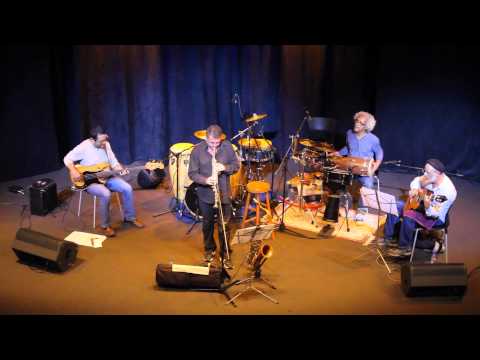
Carlos “Nené” Quintero — “Una Mañana” · Live Performance
Legacy: Why Nené Quintero Still Matters
Carlos “Nené” Quintero celebrated his 73rd birthday and someone asked how he still looked so young. Multiple colleagues offered the same answer: “Because he never stopped moving forward.” That observation is the key to understanding his legacy — not as a monument to the past, but as a living, evolving force.
He was homaged at the first Festival de Música Cumbe San Agustín (2019) — held in the same Teatro Alameda neighborhood where he grew up — where he premiered a bolero he composed himself, titled Mira, in duet with singer Valentina Becerra. The same festival featured master classes and conversations with him and fellow jazz legend Alfredo Naranjo: a passing of knowledge from the neighborhood that raised them both to the next generation.
His influence is woven into Venezuelan music at every level. Younger percussionists cite the Baticonga as the model for how to think about percussion as a system rather than a single instrument. Session musicians across Latin America study his recordings as templates for how percussion should serve rather than dominate a track. And the neighborhood of San Agustín — still very much the heartbeat of Afro-Venezuelan culture — recognizes him as one of its greatest gifts to the world.
“Music has given me everything in life.”
— Carlos “Nené” Quintero, Festival Cumbe San Agustín, 2019But perhaps the most telling measure of Nené Quintero’s legacy is the answer he has always given when called the best percussionist in Venezuela: “No me considero el mejor percusionista del país.” I don’t consider myself the best in the country. It is a humility that is inseparable from his greatness — the same humility that kept him listening, evolving, and coloring every performance with something new, right up to today.
Frequently Asked Questions About Nené Quintero
Carlos “Nené” Quintero (born October 21, 1946) is Venezuela’s most celebrated percussionist. Over 50+ years he collaborated with Eros Ramazzotti, Celia Cruz, Barry White, Gato Barbieri, Jovanotti, Simón Díaz, Yordano, and dozens more. He invented two original percussion instruments — the Baticonga and the Set McGiver — and founded the jazz ensemble Nequin Group in France.
The Baticonga was invented by Carlos “Nené” Quintero. It is a percussion hybrid combining drum kit elements (bass drum, hi-hat, cymbals, toms) with Afro-Latin instruments like congas. A specially designed snare drum with a flush rim allows hands-only playing like a tumbadora. The concept developed across the 1970s and 1980s and was fully named during the Nequin Group era in France.
The Set McGiver is Nené Quintero’s modular portable percussion rig — named after the TV character MacGyver. It combines a djembé with brushes, riveted cymbals, a conga-head tambourine on a snare stand, and cowbells. It adapts to any musical context without requiring a full drum kit setup.
He was born and raised in barrio Marín, San Agustín del Sur, Caracas, Venezuela — one of the most musically rich neighborhoods in Latin America and the historical cradle of Afro-Venezuelan percussion and Grupo Madera.
Yes. Introduced through his nephew Luisito Quintero, Nené collaborated with Japanese reggae singer Pushim. The resulting recording reached the Japanese Top 10, one of several milestones in his extraordinary international career.
The Nequin Group is a jazz quintet Nené Quintero founded in France in the early 2000s, blending Afro-Venezuelan rhythms with jazz improvisation. Their album Baticonga (2004) is the most complete statement of his solo artistic vision, featuring contributions from Lilian Bencini (bass) and Boris Sudre (guitar).
Yes. Well into his 70s, Carlos “Nené” Quintero continues to perform, collaborate, and teach. His album Irrepetible (2021) and recent work with C4 Trío and Aquiles Báez confirm he remains one of the most vital voices in Venezuelan and Latin percussion.
Venezuela’s Percussion Story Discover More Artists from the Latin World
Nené Quintero is one chapter of an extraordinary ongoing story.