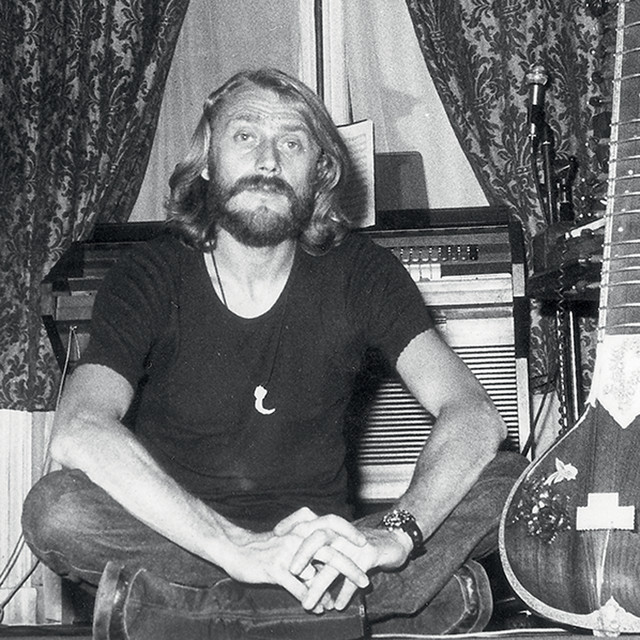
El Gato Negro Tropical: The Frenchman Who Became a Cat in a Barcelona Metro Station
Music built from travels, cultures and rhythms picked up along the way. This is music that doesn’t stay in one place. It moves.

El Gato Negro Tropical: Axel Matrod, a man who turned two decades of wandering into a sound of his own.
Overview
Who Is El Gato Negro Tropical?
El Gato Negro Tropical is the stage name and lifelong character of Axel Matrod, a French singer-songwriter and multi-instrumentalist originally from Toulouse. His music makes travel audible: cumbia, salsa, reggae, ska and hip hop woven together with West African traditions like the balafon and kora, sung across French, Spanish and Wolof, built from more than fifteen years spent crossing Latin America and West Africa on foot, by bus and on stage.
Three studio albums, tens of thousands of records sold, hundreds of concerts and a friendship with one of French music’s most legendary wanderers, Manu Chao, later. El Gato Negro Tropical remains exactly what he started as: a street musician who never really stopped moving, and never wanted to.
Origin Story
2005: A Character Born in the Barcelona Metro
The story begins with a fifteen-year-old in Toulouse whose life changed the moment he heard the Buena Vista Social Club. That discovery set young Axel Matrod on a path that would define the rest of his life. In 2005, he created the character El Gato Negro, “the black cat,” while busking for coins in the Barcelona metro, passing a hat to strangers rushing past on their daily commute.
It was there, underground, playing for whoever would stop to listen, that a French teenager began building an identity that would eventually carry him across two continents.
A Chance Encounter
The Guitar Manu Chao Gave Him
Life on the street is not always gentle. One day, playing on the sidewalks of Barcelona, Axel had his guitar confiscated by the Guardia Civil. Broke and instrumentless, he found himself in a bar shortly after when a fellow Frenchman, moved by his situation, offered him a replacement guitar. That stranger’s name was Manu Chao.
“He creates the character El Gato Negro in 2005 in the Barcelona metro, where he performs passing the hat. There he befriends a certain Manu Chao.”
Le Cafe de la Danse, artist biographyThe friendship endured. A decade later, in the summer of 2015, the two crossed paths again, this time sharing the bill and the stage at a summer festival, two generations of French musicians who had both found their voice by refusing to stay in one country, or one genre.
The Road
Toulouse, Irina and the Birth of a Band
From Barcelona, the road pulled Axel further still: Argentina, Bolivia, Peru, Paraguay, Mexico, Guatemala, Honduras, more than four years of travel and street performance across Latin America. Somewhere along that road, he met Irina, a Cuban multi-instrumentalist and singer, and the two formed a musical partnership that would become a marriage.
Together they returned to Toulouse and built a permanent band around their duo: El Gato Negro Y Su Combo Tropical, filling out the lineup with a percussionist, two horn players and a bassist. Toulouse became, in the words of one French critic, the new capital of cumbia, cha cha and bolero, the launchpad of a sextet that modernized Latin genres for French audiences hungry for something they had never quite heard before.
The Debut
Cumbia Libre: 10,000 Copies and a Manifesto
In 2015, on the young French label Belleville Music, the band released their debut album, Cumbia Libre, a title that read like a manifesto: cumbia, free. Thirteen tracks of Cuban son, salsa, samba, reggae and rap sung across three languages, the record sold an impressive 10,000 copies and set the band on the road for 80 concerts a year, filling some of France’s finest venues and festivals.
“El Gato Negro’s album is a true immersion in the feverish streets, like those of Barcelona, where long intoxicating wanderings will make us dance until the end of a torrid night.”
Break Musical, on Cumbia Libre2019
Ouvre la Porte: Singing in French for the First Time
Escale after escale, the momentum of touring pulled Axel irresistibly toward the French-speaking world, from Quebec to Paris to Burkina Faso, building a genuine bridge between his Latin American roots and the French-speaking Africa he was discovering. On April 19, 2019, he released his second album, Ouvre la Porte, twelve tracks recorded across four cities on two continents: Toulouse, Bogota, Mazunte and Ouagadougou, mastered by the legendary Alex Gopher (known for his work with Christine and the Queens and Eddy de Pretto).
The album marked a turning point: an invitation from Amnesty International pushed Axel to write his first song entirely in French, the title track “Ouvre la porte,” followed by five more (Ensemble, Guitare de plage, Jour de fête, T’aimes pas ça, El tiempo pasa). The record folded in a new sound entirely: the balafon of Seydou Diabate Kanazoe, the drums of Cyril Atef (of -M- and Bumcello), and the voice of Kandy Guira (associated with Oumou Sangare), where the hot sand of the Pacific met the colorful pavement of Africa.
2024 – 2026
Tigre qui pleure: The Cat Shows His Tears
Fifteen years of relentless travel through some 30 countries later, El Gato Negro’s live shows had become, in the words of his label, less like concerts than trances or journeys, carrying audiences from Latin America to West Africa through deep, spellbinding lyrics. His touring band by this point included Salif Diarra, a master of the kora and balafon met in Burkina Faso, Franco-Congolese rapper Mary May, and Mexican Afro-Latin percussionist Pablo Sentíes, with whom he has now shared over 300 concerts.
On January 26, 2024, he released his third album, Tigre qui pleure (The Tiger Who Cries), recorded partly in Dakar and produced by acclaimed French beatmaker GUTS. Ten tracks brought together musicians from West Africa and Cuba, jazz meeting hip hop, tradition meeting the digital, French meeting Wolof and Spanish. The guest list reads like a who’s who of Afro-Latin music: Orchestra Baobab, Cucurucho Valdes, Pat Kalla, Cyril Atef, Florian Pellissier and more.

“Sable Noir,” from Tigre qui pleure, performed live: the sound of a street musician turned bandleader, still moving.
For the first time, the album let the melancholy behind the festive mask show through. As Axel’s own label put it, beneath El Gato Negro’s perpetually cheerful character, a hitherto hidden sadness came fully into view. In March 2025, he followed up with a bonus EP, “Tigre bonus,” featuring a striking collaboration with Cuban percussionist and vocalist Brenda Navarrete.

“Mourir de joie” featuring Brenda Navarrete: from the Tigre bonus EP, a Cuban-French collaboration born from years on the road.
The band toured extensively behind the album through 2025 and into 2026, carrying “Le Tigre” across French stages and beyond, proof that after two decades, the cat still refuses to sit still.
The Sound
The Sound That Never Stays Still
Critics have reached for the same handful of names trying to describe El Gato Negro Tropical: Manu Chao, Sergent Garcia, Buena Vista Social Club. The comparisons make sense and miss the point at once. What defines his music is not any single genre but the refusal to pick one: cumbia candela, salsa, cha cha, bolero, reggae, ska, hip hop, Afrobeat, all folded into a single, restless catalog shaped by a folklore of some fifteen countries absorbed across four years of touring alone.

Six musicians, a dozen influences, one philosophy: cumbia libre. Free cumbia, free of borders.
Discography
El Gato Negro Tropical: Discography
Cumbia Libre
Cumbia · Salsa · Reggae
The debut manifesto, released on Belleville Music. Thirteen tracks across three languages, 10,000 copies sold, and the launch of 80 concerts a year across France.
The essential starting point
Ouvre la Porte
Latin-African Pop
Recorded across Toulouse, Bogota, Mazunte and Ouagadougou, mastered by Alex Gopher. His first songs written in French, inspired by an Amnesty International invitation.
Tigre qui pleure
Afro-Latin · World Music
Recorded in Dakar and produced by GUTS, featuring Orchestra Baobab and Cucurucho Valdes. The mask comes off to reveal a more melancholic Axel.
His most personal work
Tigre Bonus (EP)
Afro-Latin · World Music
A bonus companion to Tigre qui pleure, featuring the striking collaboration “Mourir de joie” with Cuban artist Brenda Navarrete.
FAQ
Everything You Need to Know About El Gato Negro Tropical
Who is El Gato Negro Tropical?
How did El Gato Negro meet Manu Chao?
What is El Gato Negro Tropical’s musical style?
What albums has El Gato Negro Tropical released?
Who produced Tigre qui pleure?
Where is Axel Matrod from and how did his band form?
Explore More
Discover More French Music
Share This