
Ego as an Artist When It Fuels You, When It Breaks You, and How to Tell the Difference
The artist who has no ego will never share their work. The artist whose ego goes unchecked will stop growing. The only path is the one between them.
What Ego Actually Is for Artists
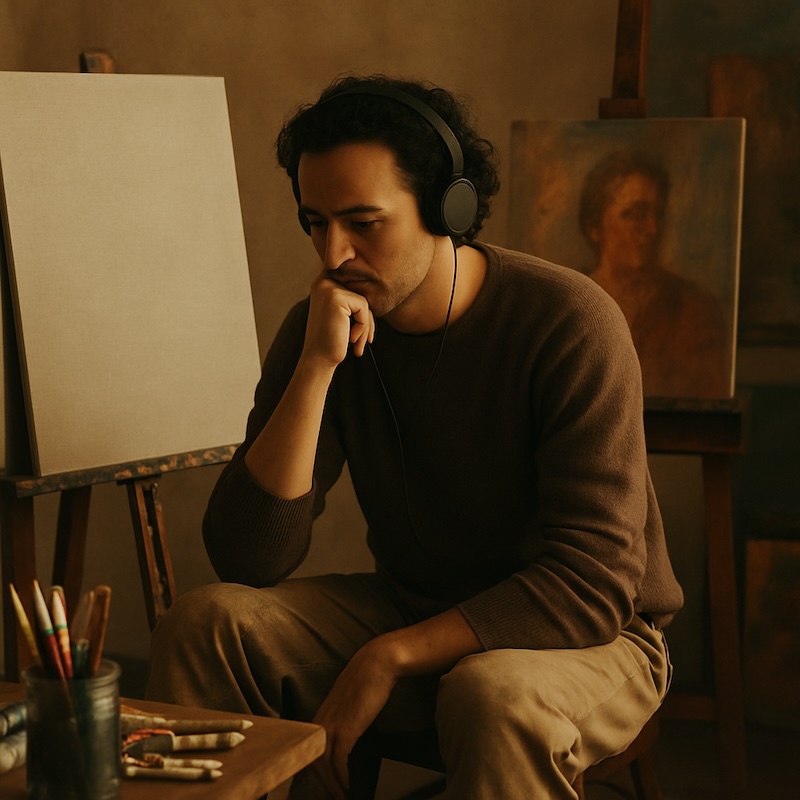
As an artist, you have likely experienced moments when praise sent your confidence soaring, or when criticism made you question everything you had built. These swings often come from the same place: your ego. That sense of self-importance that can either carry you to creative heights or trap you in a cycle of arrogance and insecurity.
Art is inherently personal. It is a direct expression of your inner world exposed to public judgment. That exposure demands a certain degree of self-belief to survive at all. But that same necessity can become the thing that stops your growth.
“The ego is not master in its own house.”
Sigmund FreudThe question is not whether to have an ego but how to relate to it. As Grace Dow puts it: “Artists need egos. We need to think we’re special. We need to believe in ourselves when no one else does, because how else are we ever going to survive the rejections, the criticisms, and the deafening silence that often greets our work?”
That is the honest case for ego. But the same force that keeps you going can also be the thing that prevents you from getting better. The ego that protects you from giving up is the same ego that can prevent you from hearing the feedback that would actually help.
When Ego Works in Your Favor
A well-managed ego is one of the most powerful assets in an artist’s toolkit. The right degree of self-belief, without tipping into arrogance, enables things that purely modest artists rarely achieve.
Resilience Through Rejection
A healthy ego creates a psychological buffer between the judgment of your work and your sense of who you are. It allows you to separate constructive criticism from your core worth as a person, which means you can take the lesson without being crushed by the delivery.
Permission to Take Risks
When you believe sufficiently in your ability, you are more willing to experiment: new techniques, unfamiliar styles, creative territory that might not work. That willingness to risk failure is often where the most original work lives. Ego, in the right proportion, is what makes the experiment feel worth attempting.
Professional Advocacy
A grounded sense of your own value makes it possible to negotiate properly for compensation, recognition, and credit. Artists with a healthy ego tend to set stronger professional boundaries and resist exploitation more effectively. This is a practical, career-level benefit that modest artists often miss.
Developing a Distinct Voice
Believing in the validity of your own perspective is what enables you to move past imitation toward genuine expression. Without some degree of ego, most artists remain in the shadow of their influences, never fully committing to what makes their work theirs.
“A degree of self-belief is essential for artists. Without it, we would never have the courage to share our work, engage with critique, or pursue mastery.”
Sean Tucker, Photographer and AuthorWhen Ego Becomes the Problem
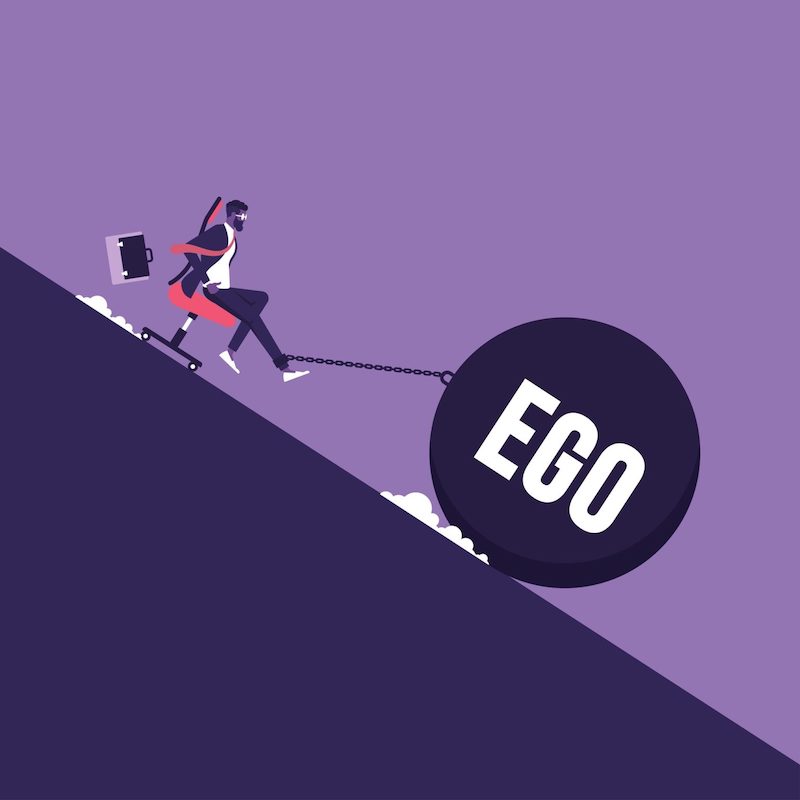
The same force that protects you can become the thing that limits you. An inflated ego does not feel dangerous from the inside. That is part of what makes it so difficult to catch.
Creative Stagnation
Ryan Holiday, in Ego Is the Enemy, makes a point that applies directly to creative work: ego creates an illusion of expertise that paradoxically prevents actual mastery. When you believe you have arrived, you stop looking for where to go next. Artists with oversized egos often resist feedback and new learning precisely because both imply there is room to improve, and the ego reads that as a threat.
Damaged Relationships
An inflated ego alienates the collaborators, mentors, and peers who could otherwise support your career. Perceived arrogance is one of the fastest ways to lose opportunities and goodwill in any creative field. The people who could help you most tend to stop offering when they feel consistently dismissed.
Emotional Volatility
When your self-worth is tied too closely to external validation, every piece of praise becomes a high and every piece of criticism becomes a crisis. This creates an unstable foundation for any sustained creative practice. The artist who needs constant approval to function well is already in a fragile position.
Losing the Audience
Artists who become too self-focused often lose sight of the communicative purpose of their work. Art that exists primarily to reflect the artist’s self-image back to themselves tends to disconnect from the audience the artist claims to serve. Technical proficiency cannot compensate for that disconnection.
The ego that protects you from the pain of rejection is the same ego that eventually prevents you from hearing the feedback that would help you grow. Managing it is not about eliminating it. It is about staying aware of when it has shifted from serving your work to serving itself.
The Balance: Confident Humility
The most sustainable creative posture is what researchers in creative psychology call “confident humility”: a combination of self-belief and openness to growth that neither diminishes your work nor closes you off to what might improve it. It is not a fixed state but a practice, something you return to rather than something you achieve once.
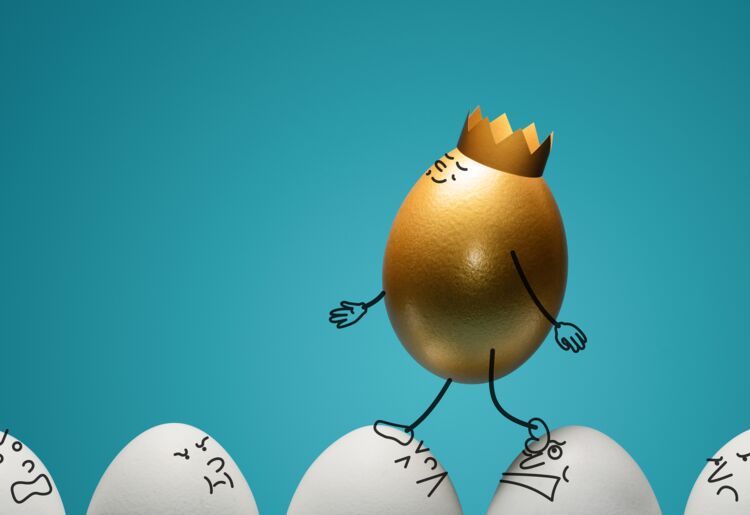
You can recognize this balance in yourself by a few consistent signs: you can receive criticism without becoming defensive; you can acknowledge both strengths and weaknesses in your own work; you remain genuinely curious about learning; you can promote what you do without exaggerating it; you celebrate others’ successes without jealousy.
That last point deserves its own attention. How you respond to a peer’s success is one of the clearest indicators of where your ego actually sits. A balanced ego can find genuine pleasure in what someone else has built, because it does not read their achievement as a subtraction from yours.
“The sweet spot is where you believe in yourself enough to take risks but remain humble enough to grow from your mistakes.”
Phil JohnsonPractical Tips for Managing Your Ego
Ego management is not a philosophical concept. It has practical applications that show up in how you work, how you receive feedback, and how you relate to the people around you.
Cultivate relationships with peers, mentors, or critics who will tell you the truth. Make clear that you genuinely want to improve, not just to be reassured. Praise without context does not make you better.
Regularly expose yourself to work that reminds you how much further there is to go. This is not self-punishment. It is calibration. It keeps your sense of where you are in perspective.
Write honestly about your work: what succeeded, what failed, what you learned. This creates a private space to process both pride and disappointment without filtering either one for an audience.
Criticism of a song, a painting, or a performance is not criticism of who you are. Developing the ability to make this distinction cleanly is one of the most practical skills available to any artist.
Return regularly to why you create, beyond validation or reward. When the work is grounded in something intrinsic, the ego has less leverage over your motivation.
Surround yourself with other artists who are both supportive and honest. A community that only affirms you is comfortable. One that also challenges you is useful.
Four Exercises That Actually Help
These are not abstract ideas. Each one is something you can do this week.
When you evaluate your own work, look at it from three positions deliberately: as the proud creator (what did you execute well?), as the constructive critic (what would you change?), and as an objective observer (how does this compare to similar work in your field?). Doing all three every time prevents you from getting stuck in any one of them.
Once a week, publicly praise or promote another artist’s work. Keep a list of artists who inspire you and why. Send thank-you messages to mentors. Share opportunities with peers. This practice directly counteracts the competitive, zero-sum thinking that an unchecked ego tends to produce.
Periodically put yourself in the position of a complete novice: take a class in an unfamiliar medium, try to recreate a work you admire to understand its complexity, ask “what if?” questions that challenge your established methods. Being reminded of what it feels like not to know something is one of the most reliable cures for artistic arrogance.
Keep a private document recording your artistic failures: rejected submissions, projects that did not meet your expectations, technical skills you have struggled to master. Next to each one, note what you learned. This normalizes failure as part of the process and reduces the ego’s reflexive defensiveness when things go wrong.
Frequently Asked Questions
Neither. A healthy ego provides the confidence to create, share work, and survive rejection. An unchecked ego leads to creative stagnation, damaged relationships, and emotional instability. The key is balance: enough self-belief to take creative risks, enough humility to keep growing.
A balanced ego fuels creative risk-taking and helps artists persist through doubt. An oversized ego creates resistance to feedback and new learning. As Ryan Holiday argues in Ego Is the Enemy, ego builds an illusion of expertise that prevents actual mastery: when you believe you have arrived, you stop looking for where to go next.
Confidence allows an artist to create and share while remaining open to growth. Ego, when unchecked, demands validation and resists challenge. The practical difference shows up most clearly in how an artist responds to criticism: a confident artist can use it; an ego-driven artist treats it as an attack.
Because art requires a degree of self-belief to survive at all. Rejection is constant, recognition is scarce, and the work is inherently personal. The ego develops as a protection mechanism against all of that. The problem is that it can become a barrier to growth if left unexamined.
Practically: seek honest feedback rather than only praise; study artists whose work humbles you; separate criticism of your work from criticism of yourself as a person; reconnect regularly with why you create beyond external validation; and build a creative community that challenges as well as supports you.
A healthy ego provides the confidence needed to create, share, and withstand rejection.
An unchecked ego leads to stagnation, damaged relationships, and disconnection from your audience.
The ideal balance is confident humility: self-belief combined with genuine openness to growth.
Honest feedback, regular reflection, and separating yourself from your work are the core practices.
How you respond to others’ successes is one of the clearest indicators of where your ego actually sits.
Keep Growing More Music Career Insights on France Music
The artistic journey does not end here.