John Coltrane: How Jazz Became a Mathematical and Spiritual Journey The saxophonist who transformed music into a sacred geometry of sound
Why Coltrane Was Different
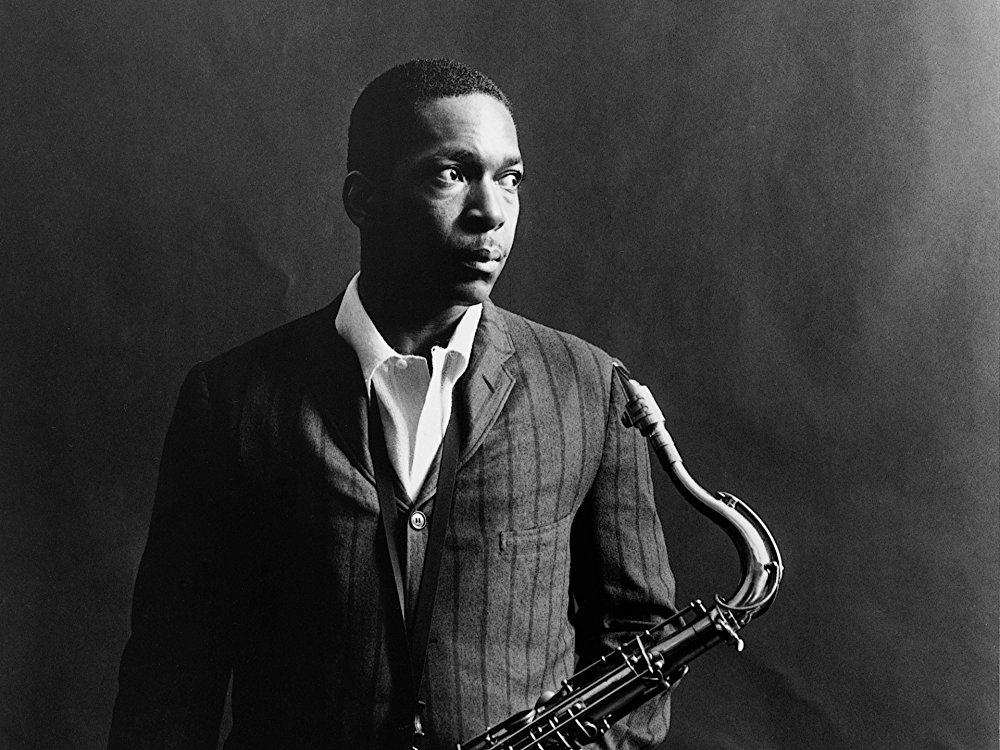
A saxophone wails in the darkness. A man hunches over his instrument, eyes closed, fingers moving across the keys in patterns that seem almost algorithmic. This is John Coltrane — and he was not just playing jazz. He was unraveling the mathematical fabric of the universe through sound.
For most of jazz history, the art form was understood primarily as emotional expression: the blues cry, the bebop sprint, the ballad ache. Coltrane did not abandon emotion. He found something underneath it. He came to believe that musical patterns were not arbitrary — that they reflected mathematical structures present in nature, in sacred texts, and in the universe itself. Music, for Coltrane, was a lens through which one could glimpse the divine.
“I want to be a force which is truly for good. I want to be a force which represents something that isn’t purely physical, a force that represents something just as spiritual. Therefore, the highest purpose of music is to reach that force.”
John ColtraneThis was not metaphor. Coltrane studied the mathematical writings of Pythagoras alongside the sacred texts of Christianity, Hinduism, Buddhism, and Islam. He practiced scales for hours a day, not to build speed, but to internalize harmonic relationships that existed as patterns — patterns he believed existed in all things. The result was a body of work that continues to interest musicians, mathematicians, physicists, and theologians alike, more than five decades after his death at 40.
The Coltrane Circle: A Mathematical Blueprint for Harmony
In 1967, the year of his death, John Coltrane gave saxophonist Yusef Lateef a hand-drawn diagram. Lateef later included it in his 1981 book Repository of Scales and Melodic Patterns, and it has been studied and debated ever since. The diagram is known today as the Coltrane Circle.
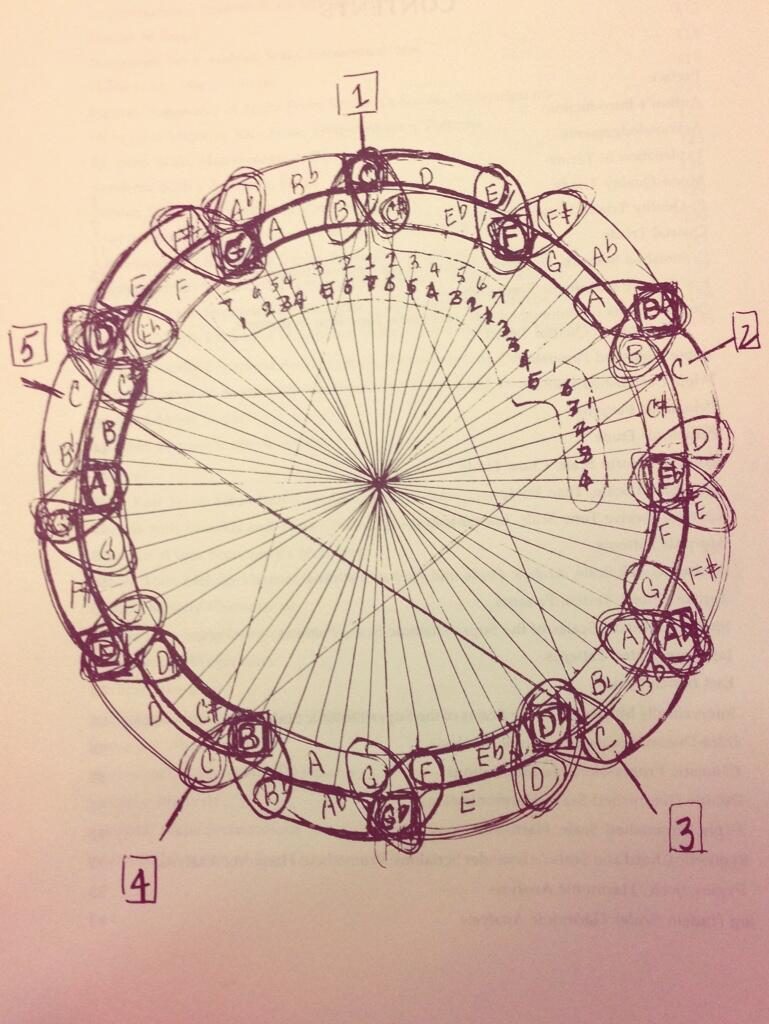
The Coltrane Circle, given to Yusef Lateef in 1967. Via OpenCulture.
The diagram consists of two concentric circles divided into 12 equal parts, each representing one of the 12 tones of the chromatic scale. The outer circle moves chromatically clockwise. The inner circle moves counterclockwise. The connections between points reveal the mathematical relationships between tones that Coltrane was using — and that traditional Western music theory had largely left unexamined.
What makes the diagram remarkable is how it marries the precision of geometry with musical intervals. Musicians and mathematicians have found in it connections to everything from the Fibonacci sequence to ancient Greek concepts of musical harmony. The geometric relationships mirror principles found in sacred geometry, in the structure of molecules, and in wave physics.

Coltrane’s harmonic connections annotated. Via CDM.
Traditional Western music theory organizes harmony primarily around the cycle of fifths. Coltrane’s diagram revealed alternative geometric paths through the 12 tones — paths that produced the unusual harmonic progressions in his compositions, and that no existing theoretical framework had mapped. He was not illustrating a known idea. He was drawing a new one.
Giant Steps: The Coltrane Changes in Action
If the Coltrane Circle is the theory, Giant Steps (1960) is the proof. The composition is considered one of the most technically demanding jazz standards ever written — not because of its speed alone, but because of the mathematical structure of its harmonic progressions. The Coltrane Changes divide the octave into three equal parts using major thirds: key centers separated by four semitones.
The three key centers of Giant Steps, each separated by a major third (4 semitones) — a symmetrical division of the octave
This symmetrical structure was unprecedented in jazz. Traditional harmony moved through the cycle of fifths — a pattern every jazz musician knew intuitively. Coltrane’s innovation was to superimpose a different mathematical grid: a pattern based on the division of the octave into thirds rather than fifths. The result is a progression that sounds disorienting until your ear recalibrates — which is precisely the effect.
The chord changes in Giant Steps arrive at a rate of two per measure, sometimes faster. At the tempos Coltrane played, an improviser has roughly half a second to recognize each key center, orient within it, and move to the next. This does not leave room for intuition alone. It requires something closer to algorithmic thinking: internalizing the mathematical pattern well enough that navigation becomes automatic.
“What Coltrane did in Giant Steps was to superimpose one harmonic pattern — the cycle of major thirds — onto another — the cycle of fifths — creating a mathematical structure that still sounds musical.”
On the structure of the Coltrane ChangesMathematically, Coltrane’s approach resembles concepts from modular arithmetic and group theory: fields that study patterns, symmetries, and transformations. The three key centers in Giant Steps are analogous to the three equal divisions of a modular arithmetic system — they are symmetrical, predictable in their own internal logic, and deeply disorienting if you are trying to apply a different logic to them.
A Love Supreme: Where Mathematics Meets the Sacred
A Love Supreme, recorded in December 1964 and released in 1965, is the album where Coltrane’s mathematical precision and spiritual seeking become inseparable. It is a four-part suite — Acknowledgement, Resolution, Pursuance, Psalm — that functions simultaneously as a jazz composition, a structured meditation, and a prayer.
After overcoming heroin and alcohol addiction in 1957, Coltrane underwent what he described as a spiritual awakening. He wrote in the album’s liner notes: “In the year 1957, I experienced, by the grace of God, a spiritual awakening which was to lead me to a richer, fuller, more productive life.” From that point, his approach to music changed fundamentally. He was no longer only developing as a musician. He was seeking.
“My goal is to live the truly religious life, and express it in my music. My music is the spiritual expression of what I am — my faith, my knowledge, my being.”
John ColtraneThe mathematical structure of A Love Supreme is as precise as anything in Giant Steps. The four-note motif that opens the first section — which can be sung as “A Love Su-preme” — is transformed through a series of mathematical operations throughout the composition: transposed, inverted, augmented, and recombined. The rhythmic patterns follow mathematical sequences designed to create a meditative effect, cycling through repetitions that build hypnotic intensity.
Coltrane had studied the sacred texts of multiple traditions — Christianity, Hinduism, Buddhism, Islam — alongside Pythagorean writings on the mathematical foundations of musical harmony. He found convergences. The Pythagorean idea that certain mathematical ratios expressed cosmic order, the Hindu concept of nada brahma (the universe as sound), the Sufi understanding of music as a vehicle for spiritual elevation: these were, for Coltrane, different languages describing the same reality. A Love Supreme was his attempt to speak all of them at once.
Sheets of Sound: Harmonic Density as Mathematics
Before Coltrane became the modal and spiritual explorer of the 1960s, he developed a technique that brought him his first major critical attention. In the mid-1950s, critic Ira Gitler coined the term “sheets of sound” to describe what Coltrane was doing: playing the notes of a chord so rapidly that they were perceived almost simultaneously rather than sequentially.
The effect is harmonic density — the sensation that multiple harmonies are sounding at once, that the music is thicker than the instrument should allow. In mathematical terms, this is analogous to the principle of superposition: multiple states occupying the same space simultaneously. What appears as a single saxophone sound is actually a rapid traversal of a harmonic landscape, compressed in time until its component parts blur into a texture.
The passages are not random. Musicians who have transcribed Coltrane’s sheets of sound performances have found that the note groupings follow clear mathematical patterns, often based on specific intervals, pentatonic or hexatonic scales, or relationships derived directly from the harmonic framework of the composition. Even in what sounds like his most chaotic and uninhibited playing, Coltrane was thinking with mathematical precision — the precision had simply been internalized to the point where it appeared effortless.
The mathematical density of Coltrane’s sheets of sound technique has influenced generations of musicians far beyond jazz — from rock guitarists to electronic music producers who use layered synthesis and granular processing to create similar harmonic textures. The principle that harmonic information can be compressed in time to create texture rather than melody is foundational to many modern production approaches.
The St. John Coltrane African Orthodox Church
The St. John Coltrane African Orthodox Church was founded in San Francisco in 1971 — four years after Coltrane’s death — using his music and philosophy as central elements of its worship. The church is a legally recognized institution. A Love Supreme is incorporated into liturgical practice. Its congregation views Coltrane’s mathematical-spiritual synthesis not as an artistic metaphor but as a genuine path to divine understanding. The church represents perhaps the most concrete confirmation that Coltrane’s approach to music as spirituality was not a private conviction but a transmissible experience — one that can be communicated to and sustained by others.
Legacy: Music, Physics, and Beyond
Coltrane’s mathematical-spiritual framework has generated influence across disciplines that rarely intersect. The same structural ideas that revolutionized jazz harmony have been found to resonate with questions in theoretical physics, mathematics, and cognitive science.
The Coltrane Circle is now a standard study tool in advanced jazz education worldwide. Contemporary music theorists continue to find in its geometry connections to advanced concepts in group theory and symmetry that Coltrane intuited rather than derived formally.
Coltrane’s mathematical frameworks have directly inspired algorithmic composition tools that use similar symmetrical principles to generate harmonic progressions and melodic patterns. His approach to music as a structured system has proven more generative than almost any other jazz framework.
Physicist and mathematician Stephon Alexander, in his book The Jazz of Physics, argues that Coltrane’s musical mathematics intuitively reflect profound patterns in the physical universe, including analogies to string theory and quantum mechanics. Coltrane arrived at these patterns through music rather than physics — and arrived at them first.
Religious scholars across traditions continue to find in Coltrane’s music a model for how mathematical structures can serve as a vehicle for spiritual experience. His synthesis of rigor and transcendence remains a reference point for anyone exploring the relationship between intellectual discipline and spiritual depth.
Physicist and cosmologist Stephon Alexander argues in The Jazz of Physics (2016) that Coltrane’s musical mathematics reflect, with startling accuracy, some of the deepest patterns in the physical universe. The suggestion is not that Coltrane studied physics. It is that the mathematical structures he discovered through music are not specific to music — they appear wherever deep mathematical order underlies complex phenomena.
Essential Listening
These four recordings trace the full arc of Coltrane’s mathematical and spiritual journey, from the harmonic innovation of the early 1960s to the cosmic explorations of his final years.
The mathematical framework in its purest form. The Coltrane Changes, the harmonic architecture of major thirds, the improvised navigation of a structure unlike anything that existed in jazz before it. Start here to understand the mathematics.
The perfect fusion. Mathematical structure and spiritual seeking in a single work. The four-part suite that synthesizes everything Coltrane had learned and believed into one sustained statement. The definitive Coltrane recording.
Coltrane’s expansion of mathematical principles into collective improvisation. Eleven musicians navigating a structured framework simultaneously. More challenging than A Love Supreme, but equally deliberate in its architecture.
Coltrane’s final explorations, recorded in the last months of his life. Duets with drummer Rashied Ali. Cosmic in scope, intimate in execution. Mathematical-spiritual connection stripped to its essentials: two musicians, infinite space.
Applied Coltrane: What You Can Take From His Approach
Coltrane’s framework is applicable at different levels of musical sophistication. Beginners can approach the basic patterns; advanced musicians can explore the deepest mathematical implications.
Experiment with dividing musical spaces symmetrically, as Coltrane did in Giant Steps. Create progressions based on equal divisions of the octave — major thirds, minor thirds — and explore what harmonic territory emerges. The point is not to copy Coltrane but to find your own symmetrical system.
Study the Coltrane Circle and apply it to analyze compositions across genres. Look for geometric representations of harmonic relationships. Consider how the same mathematical structure can appear in different musical contexts — jazz, classical, electronic — revealing hidden connections.
Listen to A Love Supreme or Giant Steps with specific focus on patterns: what repeats, what transforms, what resolves. Try to hear the mathematical architecture beneath the emotional surface. Active, structural listening is a different and deeper experience than passive appreciation.
Use music as a meditation tool, following Coltrane’s example. Select pieces with strong mathematical structures and focus on how these patterns create states of heightened awareness. Coltrane’s example suggests that intellectual rigor and spiritual depth are not opposing forces.
Coltrane’s Circle Diagram, given to Yusef Lateef in 1967, maps the mathematical relationships between the 12 tones that underpin his harmonic innovations.
Giant Steps (1960) divided the octave into three equal parts using major thirds — a symmetrical structure without precedent in jazz that transformed improvisation into a form of mathematical problem-solving.
After his 1957 spiritual awakening, Coltrane came to see musical patterns as reflections of divine patterns, studying Pythagoras alongside the sacred texts of multiple world religions.
A Love Supreme (1965) is the definitive document of his synthesis: mathematical precision and spiritual seeking merged in a single four-part suite.
Physicist Stephon Alexander’s The Jazz of Physics (2016) argues that Coltrane’s musical mathematics intuitively reflect deep structures in the physical universe, including analogies to quantum mechanics and string theory.
The St. John Coltrane African Orthodox Church, founded in San Francisco in 1971, continues to use A Love Supreme as part of its liturgical practice.
Frequently Asked Questions
The Coltrane Circle is a hand-drawn diagram John Coltrane gave to saxophonist Yusef Lateef in 1967. It consists of two concentric circles divided into 12 equal parts representing the 12 chromatic tones, connected to reveal mathematical relationships between them. Lateef included it in his 1981 book Repository of Scales and Melodic Patterns. Musicians, mathematicians, and physicists have studied it for decades, finding in it connections to sacred geometry, group theory, and wave physics.
The Coltrane Changes are a harmonic progression technique introduced in Giant Steps (1960). The technique divides the octave into three equal parts by moving through key centers separated by major thirds (4 semitones). This creates a symmetrical harmonic structure unlike the traditional cycle of fifths, requiring improvisers to navigate rapidly shifting tonal centers — sometimes two chord changes per measure — making it one of the most technically demanding approaches in jazz.
Giant Steps (1960) divided the octave into three equal parts using B major, G major, and E-flat major as its key centers — a symmetrical structure similar to concepts in modular arithmetic and group theory. The progression moves so rapidly that it forced improvisers to think algorithmically rather than emotionally, transforming jazz improvisation from intuitive expression into something closer to mathematical problem-solving.
Sheets of sound is a term coined by critic Ira Gitler in the mid-1950s to describe Coltrane’s technique of playing the notes of a chord so rapidly they are perceived almost simultaneously rather than sequentially. The effect is harmonic density — multiple harmonies sounding at once. Transcriptions of these passages have revealed intricate mathematical relationships between the notes, showing that even in his most apparently chaotic playing, Coltrane was thinking with mathematical precision.
After overcoming heroin and alcohol addiction in 1957, Coltrane experienced a spiritual awakening that transformed his music. He studied Christianity, Hinduism, Buddhism, Islam, and Pythagorean mathematics, finding convergences between traditions. He came to believe musical patterns were reflections of divine patterns in the universe — that the mathematics of music and the structures of reality were, at some level, the same thing. A Love Supreme is the fullest expression of this belief.
The St. John Coltrane African Orthodox Church was founded in San Francisco in 1971, using Coltrane’s music and philosophy as central elements of its worship. It is a legally recognized church. A Love Supreme is incorporated into its liturgical practice. The church views Coltrane’s mathematical-spiritual synthesis as a legitimate path to divine understanding and continues to hold services today.
The Music Goes On More Artist Profiles and Music History on France Music
Coltrane showed that mathematical precision and spiritual depth are complementary, not opposing forces.