French Electronic Music The Definitive Guide: History, Artists and the French Touch
- 01 What Is French Electronic Music?
- 02 History: From 1928 to Today
- 03 The Pioneers (1970s-1980s)
- 04 The French Touch Movement (1990s)
- 05 The Second Wave: Justice, M83 and Beyond (2000s)
- 06 The 25 Most Important French Electronic Artists
- 07 20 Essential French Electronic Tracks
- 08 The New French Electronic Scene (2020s)
- 09 FAQ: Everything You Need to Know
What Is French Electronic Music?
French electronic music is one of the most influential and widely recognized music traditions in the world. From the earliest synthesizer experiments in Paris in the 1970s to the global domination of Daft Punk in the 1990s and 2000s, France has consistently produced artists that reshape what electronic music sounds like and means.
The term covers a wide spectrum: ambient and experimental works, the filtered disco of the French Touch movement, the rock-infused electro of Justice, the cinematic soundscapes of M83, and the cutting-edge club music coming out of Paris today. What unites it all is a distinctly French sensibility, a commitment to melody, elegance, and emotional depth that sets French electronic music apart from its American and British counterparts.
France invented musique concrete in 1948. France pioneered the use of synthesizers in pop music in the 1970s. France created the French Touch in the 1990s. France gave the world Daft Punk. No country has shaped the trajectory of electronic music more profoundly, or more consistently, than France.
This guide covers the full story: the pioneers who came before Daft Punk, the French Touch movement that changed clubbing forever, the second wave of Justice and M83, and the new generation of French artists who are defining electronic music right now.
A Complete History of French Electronic Music
The story of French electronic music begins almost a century ago, long before synthesizers, long before house music, and long before Daft Punk put on their robot helmets.
The Pioneers: Before the French Touch
The story of French electronic music did not begin with Daft Punk. It began with a generation of composers, producers, and experimenters who built the sonic vocabulary that the French Touch generation would later use to conquer the world.
Jean-Michel Jarre, The Synthesizer Maestro
Jean-Michel Jarre is the undisputed godfather of French electronic music. His 1976 album Oxygene was a revelation, a record made almost entirely from synthesizers that somehow felt warm, emotional, and cinematic. The Moog Modular, ARP 2600, and EMS VCS 3 were his instruments; sweeping arpeggios and lush pads were his signature.
What separated Jarre from other electronic pioneers was his sense of scale. He turned concerts into spectacles, projecting lasers onto the pyramids of Giza, playing for millions on the Champs-Elysees, treating entire cities as his stage. His influence on every French electronic artist who followed is impossible to overstate.
“Electronic music is not a style. It is a tool. What matters is what you build with it.”
Jean-Michel JarreCerrone, The Electronic Disco King
Marc Cerrone’s 1977 album Supernature is one of the most sampled records in French Touch history. His fusion of heavy electronic percussion, synthetic strings, and a dark, almost science-fiction atmosphere created a template that Daft Punk, Cassius, and countless others would return to again and again. Listen to Supernature today and you can hear the DNA of an entire genre.
Pierre Schaeffer and the IRCAM Tradition
While Jarre and Cerrone worked in the pop arena, Paris was also home to one of the world’s great centres of experimental electronic music. Pierre Schaeffer’s invention of musique concrete at the ORTF and the later establishment of IRCAM by Pierre Boulez gave France a tradition of serious electronic composition that existed in parallel to the club scene, and frequently influenced it.
The French Touch: How France Conquered the Dancefloor
The French Touch is the most important movement in the history of French electronic music. It emerged in Paris in the mid-1990s from a specific set of influences: American Chicago house, Detroit techno, and 1970s disco and funk, all filtered through a distinctly French sense of style, elegance, and sophistication.
The sound is defined by a few key production techniques: filtered synthesizer loops that open and close over a track’s duration, heavy use of disco and funk samples, vocoder-treated vocals, and an unmistakable house groove. What made it French was the refinement, a pop sensibility and melodic intelligence that separated it from the rawer sounds coming from Chicago and Detroit.
Filtered and phased synthesizer loops, Funk and disco samples, heavily processed, Vocoder and talkbox vocals, House music groove at 120-130 BPM, Cinematic, almost film-score-like production values, Melodic hooks strong enough for radio play
How It Happened: The Respect Club Night
The French Touch was not born in a studio, it was born in a club. The Respect club night in Paris became the focal point of the scene, with DJs and producers meeting, collaborating, and developing the sound together. As Daft Punk’s reputation grew, international attention turned to Respect and the artists around it: Cassius, Etienne de Crecy, Bob Sinclar, and others were swept up by major labels almost overnight.
A crucial but often overlooked factor was the Eurostar train connection between London and Paris. UK record industry executives and music journalists could now travel to Paris easily, and they did, bringing the French Touch to global attention faster than any previous French music movement had achieved.
The Key French Touch Artists
The Second Wave: Justice, M83, and Ed Banger Records
After the first French Touch wave peaked around 2001-2002, a new generation of French producers began developing a different sound. Harder, darker, more influenced by rock and metal than by disco, but still unmistakably French in its ambition and craftsmanship.
Justice, Where Rock Met Electronic
Xavier de Rosnay and Gaspard Auge formed Justice and released their debut album Cross in 2007 to near-universal critical acclaim. Where Daft Punk filtered disco, Justice filtered metal, running synthesizers through guitar distortion pedals to create a sound that was simultaneously brutal and melodic. “D.A.N.C.E.” became the indie anthem of 2007; “Genesis” became a modern electronic classic.
Justice were the centerpiece of Ed Banger Records, the Paris label founded by Pedro Winter (Daft Punk’s former manager) that became the coolest address in music in the late 2000s. Together with labelmates Busy P, Uffie, SebastiAn, and Mr. Oizo, they defined a new phase of French electronic music that was louder, more aggressive, and more rock-oriented than anything that had come before.
M83, The Cinematic Universe
Anthony Gonzalez’s M83 project took French electronic music in a completely different direction, towards epic, cinematic, emotionally overwhelming soundscapes built from synthesizers, drum machines, and walls of guitar reverb. Hurry Up, We’re Dreaming (2011) and its centrepiece “Midnight City” proved that French electronic music could make you cry just as easily as it could make you dance.
David Guetta and the Stadium Era
David Guetta had been part of the Paris club scene since the 1980s, but his global breakthrough came in the 2010s when he fused French house techniques with American pop and hip-hop production values. Collaborations with Black Eyed Peas, Sia, Nicki Minaj, and others made him the most commercially successful French electronic artist ever, and the most controversial, with critics arguing that his pop-EDM fusion was a betrayal of the French Touch’s artistic values. The argument misses the point: Guetta simply took French electronic music to its logical commercial conclusion.
20 Essential French Electronic Tracks
If you want to understand the full history and range of French electronic music, these are the 20 tracks you need to hear, in roughly chronological order.
| Year | Artist | Track | Why It Matters |
|---|---|---|---|
| 1976 | Jean-Michel Jarre | “Oxygene (Part IV)” | The synthesizer anthem that brought electronic music to mainstream audiences worldwide |
| 1977 | Cerrone | “Supernature” | Electronic disco at its peak, sampled by French Touch producers for decades |
| 1994 | Motorbass | “Ezio” | Often cited as the first true French Touch track |
| 1995 | Daft Punk | “Da Funk” | Daft Punk’s first classic, gritty, funky, and completely unlike anything else |
| 1997 | Daft Punk | “Around the World” | The French Touch anthem, minimal, hypnotic, unstoppable |
| 1998 | Stardust | “Music Sounds Better With You” | Thomas Bangalter’s side project, one of the greatest house records ever made |
| 1998 | Air | “Sexy Boy” | Proof that French electronic music could be both cool and warmly emotional |
| 1999 | Cassius | “1999” | Club-ready French Touch at its most energetic and joyful |
| 2000 | St Germain | “Rose Rouge” | Jazz and house music unified perfectly, a landmark of the French sound |
| 2001 | Daft Punk | “One More Time” | The biggest French electronic record ever, still sounds perfect |
| 2001 | Modjo | “Lady (Hear Me Tonight)” | French Touch goes pure pop, one of the biggest hits of the era |
| 2005 | Bob Sinclar | “Love Generation” | French house music reaches its most joyful and mainstream expression |
| 2007 | Justice | “D.A.N.C.E.” | The arrival of the second French electronic wave, harder, darker, rock-influenced |
| 2007 | Justice | “Genesis” | Justice at their most cinematic and overwhelming, an electronic music landmark |
| 2011 | M83 | “Midnight City” | Synth-pop perfection, possibly the most emotionally powerful French electronic track ever |
| 2013 | Kavinsky | “Nightcall” | Synthwave’s defining moment, as heard in Drive, impossible to forget |
| 2013 | Daft Punk ft. Pharrell | “Get Lucky” | French electronic music’s greatest pop moment, Grammys, worldwide #1s |
| 2017 | DJ Snake | “Taki Taki” | Paris-born producer conquers global pop with a new kind of French electronic fusion |
| 2021 | Justice | “Goliath” | Justice proves that French electronic music’s second wave still has things to say |
| 2023 | Polo and Pan | “Arc en Ciel” | The new generation of French electronic music, tropical, optimistic, gloriously melodic |
The New French Electronic Scene
The French electronic scene did not end with Daft Punk’s split in 2021. A new generation of producers, DJs, and artists is building something genuinely exciting in Paris and beyond.
Polo and Pan, Tropical French House
Paul Armand-Delille and Alexandre Grynszpan make some of the most joyful and melodically rich French electronic music being produced today. Their sound, a blend of French house, bossa nova, exotica, and pop, sits in the tradition of Air and St Germain but sounds entirely contemporary. Their sets at major festivals have made them two of the most in-demand live acts in Europe.
Synapson, Electronic Meets African Rhythms
Synapson, the duo of Alexandre Chican and Hugo Lidereau, blend French electronic production with African rhythms and world music influences. Their sound is warm, danceable, and internationally minded in a way that recalls the best of the French Touch tradition while pointing towards something new.
The Paris Club Scene in the 2020s
Paris continues to produce cutting-edge electronic music from its thriving club scene. Clubs like Rex Club, where Laurent Garnier helped launch the original French Touch, remain important venues. A new wave of French DJs and producers working in techno, house, and experimental electronic music are building a scene that, while less immediately globally famous than the French Touch era, is arguably more artistically adventurous.
The new generation of French electronic artists share something with their predecessors: a refusal to be limited by genre. Polo and Pan mix bossa nova with house. Synapson blend African rhythms with electronic production. This eclecticism and melodic intelligence is the constant thread running through French electronic music from Jean-Michel Jarre to today.
Everything You Need to Know About French Electronic Music
Keep Exploring French Music
French Electronic Music Videos
1. David Guetta – One of the world’s most renowned DJs, known for blending electronic music with pop.
2. Daft Punk (Thomas Bangalter and Guy-Manuel de Homem-Christo) – Iconic duo that revolutionized electronic music with their unique style.
3. Justice (Gaspard Augé and Xavier de Rosnay) – Known for mixing electronic music with rock and their striking visual aesthetic.
4. DJ Snake – Producer and DJ famous for global hits like “Turn Down for What” and “Taki Taki”.
5. Martin Solveig – DJ and producer known for his ability to create dance-pop hits.
6. Bob Sinclar – A key figure in the house and disco scene, known for tracks like “Love Generation”.

7. Laurent Garnier – A pioneer of techno music in France, with a career spanning over three decades.
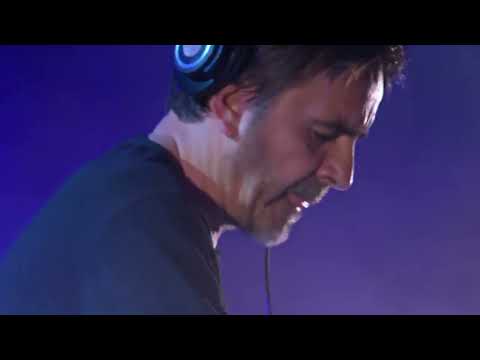
8. Gesaffelstein (Mike Lévy) – Producer and DJ known for his dark and minimalist sound.
9. Busy P (Pedro Winter) – Founder of Ed Banger Records and former manager of Daft Punk, influential in the electro scene.

10. Brodinski (Louis Rogé) – Known for his focus on techno and hip-hop music.
11. Tchami – Pioneer of the future house genre, known for his distinctive and energetic sound.
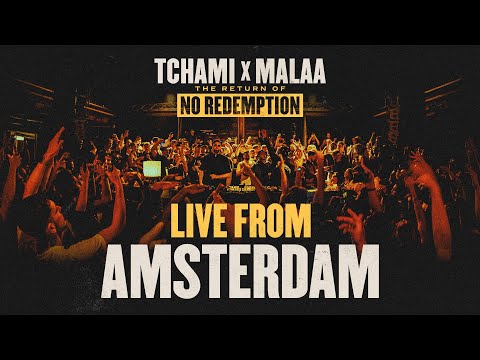
12. Malaa – Mysterious DJ and producer known for his influence in the bass house genre.

13. Breakbot (Thibaut Berland) – Producer and DJ known for his funky and disco style.
14. Cassius (Philippe Zdar and Boom Bass) – Duo influential in the house scene and French Touch movement.
15. Yuksek (Pierre-Alexandre Busson) – Producer and DJ known for his energetic electropop.
16. The Avener (Tristan Casara) – DJ and producer known for his melodic deep house.
17. Petit Biscuit (Mehdi Benjelloun) – Young producer known for his chillwave and electropop.
18. Worakls – DJ and producer who combines electronic music with orchestral elements.
19. Fakear (Théo Le Vigoureux) – Electronic producer with influences from world music.
20. Joris Delacroix – Known for his emotive and melodic deep house.
21. Joachim Garraud – Pioneer of electronic music in France, known for his electro house style.
22. Feder (Hadrien Federiconi) – DJ and producer known for his deep house and hits like “Goodbye”.
23. Kungs (Valentin Brunel) – Young DJ and producer known for his hit “This Girl”.
24. Madeon (Hugo Leclercq) – Electropop producer known for his innovative use of samples.
25. Mr. Oizo (Quentin Dupieux) – Electronic music producer and filmmaker, known for his hit “Flat Beat”.

26. SebastiAn – Producer and DJ with a distinctive style that mixes electro with funk and hip-hop.
27. Vitalic (Pascal Arbez-Nicolas) – Known for his energetic techno and electro.

28. Agoria (Sébastien Devaud) – DJ and producer known for his melodic and atmospheric techno.
29. Chloé – DJ and producer known for her experimental approach to electronic music.
30. Étienne de Crécy – Pioneer of French electronic music and key figure in the French Touch movement.
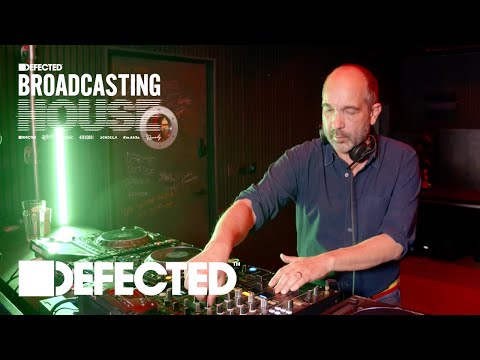
31. Jeremy Underground – DJ known for his selection of deep house and soulful music.
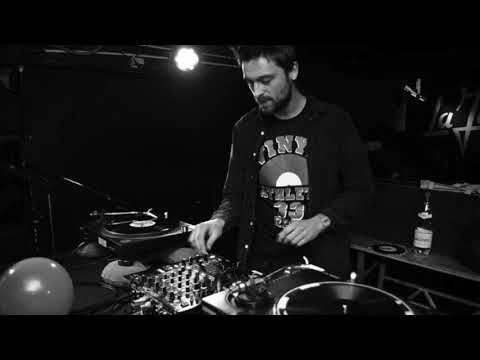
32. Rone (Erwan Castex) – Producer and DJ known for his emotive and cinematic electronic music.
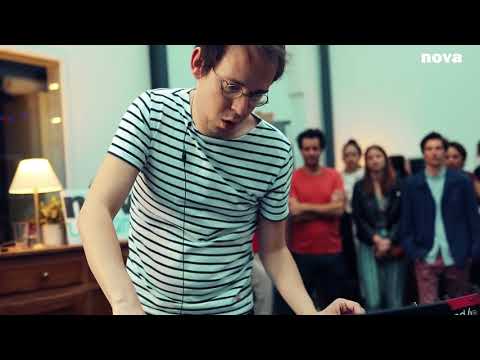
33. Acid Arab (Duo formed by Guido Minisky and Hervé Carvalho) – Known for blending electronic music with Middle Eastern sounds.
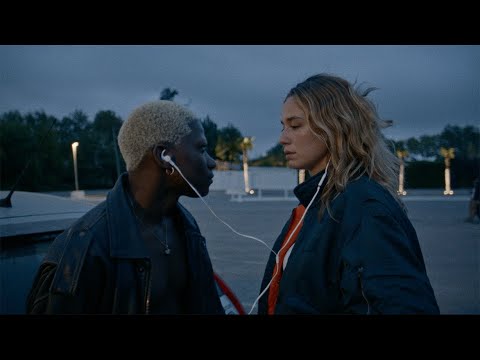
34. Polo & Pan (Paul Armand-Delille and Alexandre Grynszpan) – Duo known for their psychedelic and tropical electropop.
35. Myd (Quentin Lepoutre) – Producer and DJ part of the Club cheval collective, known for his house and disco.

36. Superpoze (Gabriel Legeleux) – Known for his melodic and atmospheric approach to electronic music.